Category Archives: Interviews

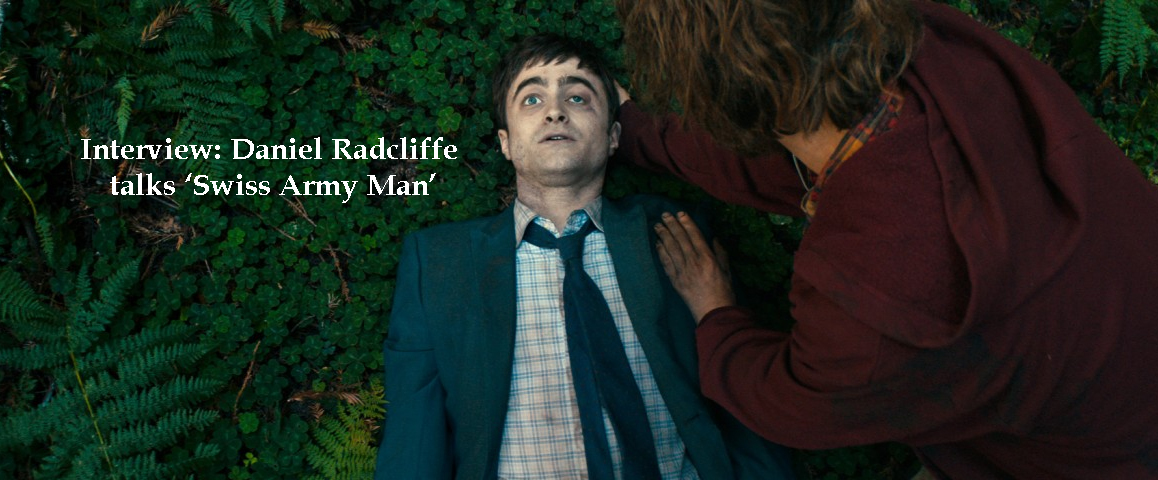
Interview: Daniel Radcliffe talks ‘Swiss Army Man’

Daniel Radcliffe in 'Swiss Army Man' 2

By Tim Lammers

Whether you’re a film critic or fan of his films, one thing you never can accuse actor Daniel Radcliffe of is an inability to be original.

Since his days as the boy wizard in the “Harry Potter” film saga, Radcliffe, 26,  has alternated his time between theater and feature films. Most of the projects in the latter medium have been in independent productions where he’s allowed to take risks with his characters.

Needless to say, Radcliffe’s role as an usually gifted corpse in a Sundance indie sensation, the comedy drama “Swiss Army Man,” may be the actor’s riskiest — and most rewarding — project to date.

“I’ve been in the very fortunate position where I can make my choices based solely on doing stuff that I love and that excites me,” Radcliffe said in a phone conversation from New York City Monday. “Very few people get to be in that position. There’s something I love about challenging myself or doing something I’ve never done before. That’s part of the reason why I have fun at my job.”

There’s no arguing “Swiss Army Man” is strikingly original, and in fact, it may be the most original film to come out this year, if not years. Yes, at its heart it’s about the strange bond formed between a the corpse of Manny (Radcliffe) and Hank (Paul Dano), a lost soul who discovers his lifeless new friend on a beach on a deserted island  in the Pacific. However, when you experience the film throughout its kaleidoscopic  95-minute run time, you’ll be searching for answers because of its expansive narrative.

“I generally describe the film as ‘a buddy comedy where one of the buddies is dead,’ but if there was a theme to the movie, it’s really about how shame keeps us from love and being able to be loved by  someone else,” Radcliffe explained. “It’s really a film about finding acceptance with yourself and finding happiness. It’s also been described as ‘an olive branch from weirdos to latent weirdos.’ But that’s what I love about the film. It’s anarchic and crazy and goes in a million different directions, yet ultimately asks for people to just be kinder to each other and to have more compassion.”
Tim Burton Book 2
Click book cover for info on how to buy!

“Swiss Army Man” gives Radcliffe the unique opportunity to play dead throughout the film, even though Manny becomes partially reanimated while speaking to Hank. And no matter what anyone surmises, playing dead is not an easy thing to do, especially since his body is at best jostled about as he’s carried around by Dano; and at worse, tossed and turned with several hard landings as the two traverse their wilderness surroundings.

“I got a huge amount of support on what to do from Paul, but also our directors (Dan Kwan and Daniel Scheinert). They really knew what they wanted out of this character and how they wanted him to come across,” Radcliffe said. “I relied on them to finding out if I was doing it right, because how do you know how to play a dead body? I didn’t want to make him a zombie because he’s not a zombie. It was about finding a way to communicate deadness at all times, but also be lively and interesting.”

“Swiss Army Man” has attracted a lot attention in the media over Manny’s special powers — principal among them the use of his explosive body gas to do extraordinary things. It’s the sort of unexpected character ability that reportedly had Sundance audience members fleeing from screenings in disgust. Radcliffe said he’s still baffled by the criticism and the backlash, given that passing gas is a function, so to speak, to which everybody can relate.

“I don’t get how people are so offended by something that’s so basically human. It’s something that we literally all do,” Radcliffe said. “Do they get offended every time that themselves fart? How do you sustain that level of offense at that bodily function? It’s weird.”

Oh, and for those who really dwell on the production’s details, Radcliffe didn’t do his own gas passing, nor was a stunt farter employed.

“It was all done in post-production and with the help of Daniel Scheinert doing the noises off-camera,” Radcliffe said with a laugh.
Interview: Brent Spiner talks ‘Independence Day: Resurgence’

20th Century Fox

By Tim Lammers

For those who hoped that Brent Spiner’s loony yet lovable “Independence Day” character Dr. Brackish Okun somehow miraculously survived the death grip of a nasty alien in the blockbuster film 20 years ago, get ready for a dose of good news.

Dr. Okun was not dead, he was merely sleeping.

Turns out that Dr. Okun, the mad scientist from Area 51, has been in a coma for 20 years. Of course, the kicker is, it’s been 20 years since the release of the first “Independence Day” — and Spiner, whose characters over the years include the iconic android Data from “Star Trek: The Next Generation” from TV and film — hopes that fans equally respond to Okun the way they did two decades ago.

“When you come back and do a role 20 years later, the hope is that you don’t undermine the fans’ affection for the role,” Spiner said in a recent phone conversation from Denver. “You hope that they will come out of the theater with the same sort of affection they had for the character that they had for the first time.”

Opening in theaters Thursday night nationwide, “Independence Day” is literally set 20 years after the events of the 1996 original, where after two decades of peace, the human race is targeted once again by their long-tentacled foes. The funny thing is, while fans have been uttering words like “It just seems like yesterday” that the first “Independence Day” came out, when Dr. Okun awakens in “Resurgence,” it really does feel like yesterday since he’s been in a deep sleep since 1996.

“I had a meeting with (producer and co-screenwriter) Dean Devlin when I first got the script and I said, ‘You know, the unique thing about this is, for everyone else in the story, 20 years has gone by, but for Dr. Okun, it happened in the blink of an eye,'” Spiner said. “Also, where Dr. Okun in concerned, he was already an anachronism in a way. He was a man of the ’60s and is still that.  No matter what sort of changes have occurred, he stays in the same place.”

Tim Burton Book 2
Click book cover for info on how to buy!

Spiner said he was thrilled by the direction the screenwriters and director Roland Emmerich took with Dr. Okun by making him a bigger part of the story in “Resurgence.”

“The character is much deeper than before. We know much more about him and there’s more of a story,” Spiner explained. “Dr. Okun has a story this time. Yes, he fits in with everybody else and works with them in trying to survive this insurmountable problem, yet there’s a subtext that there wasn’t in the first film about who exactly he is.”

Of course, the special effects for the first “Independence Day” were groundbreaking in 1996, and there’s no question the technology has grown exponentially since then. Still and all, Spiner is pleased that Emmerich, who was at the helm of the first film, has maintained his keen sense as a storyteller while growing and learning as a filmmaker.

“I think he’s grown in a number of ways,” Spiner said. “Yes, Roland is capable of playing with all the new toys in the special effects world because he’s a smart guy and he knows what he is doing. But I think his sensibilities as a collaborator have grown, too. The way he works with actors has grown. I love working with Roland. I love his openness to experimentation, yet there was a real sense of trust. If Roland thinks his direction is right, that’s what I’m going to go with because he has a real certainty about him about what is right.”

Kylo Ren Star Wars Premium Format(TM) Figure

Most importantly, the performances still mean more to Emmerich than any sort of visual wizardry the special effects team can conjure up, Spiner said.

“He doesn’t give performers the short shrift because he’s interested in special effects,” Spiner observed. “The effects are the icing on the cake, but he’s really interested in the cake, which is the character development and who these people are.”

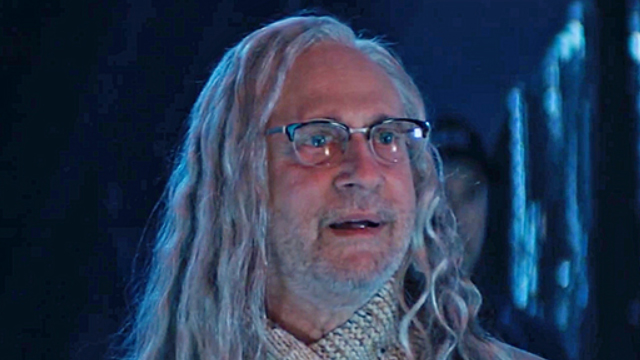
Without question, the icing on the cake for Dr. Okun in “Resurgence” is — like the first “Independence Day” — the long white locks the help define the character. They’re so radical that Spiner, 67, wouldn’t mind the hair for himself.

“On the first film I asked them if I could keep the wig, but they wouldn’t let me,” Spiner said, laughing. “I thought, ‘Man, I could really use that wig.'”

Interview: Eugene Levy talks ‘Finding Dory’ for D23.com

Disney-Pixar

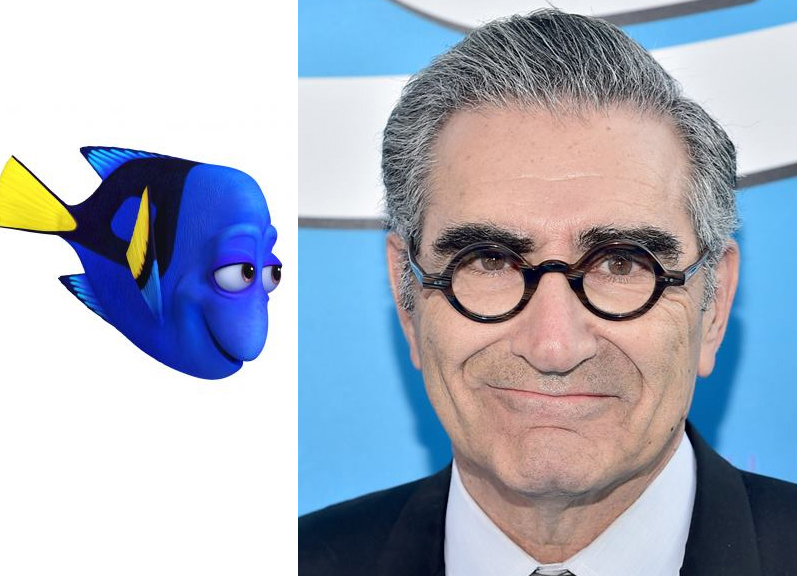
Tim Lammers talked with comedic genius Eugene Levy about his voice role of Dory’s father, Charlie, in the new Disney-Pixar blockbuster “Finding Dory.”

See an excerpt of the interview below and read the entire interview on D23.com.

After more than 100 credits in film and TV, comedic genius Eugene Levy has finally dived into the world of Disney•Pixar Animation with Finding Dory—the long-awaited sequel to the 2003 blockbuster Finding Nemo, starring Ellen DeGeneres in the title role as the forgetful blue tang fish trying to muster enough memories to find her way home to her parents.

Voicing the role of Dory’s dad, Charlie (opposite Diane Keaton as Dory’s mom, Jenny), Levy, despite having a unique set of pipes, has surprisingly only done a handful of animated projects over his 45 years in the entertainment business. Mostly, he’s dedicated his talents to classics like the famed sketch comedy series SCTV, the improv film gems Waiting For Guffman, Best in Show, and A Mighty Wind, and the hit American Pie film series. Currently, Levy stars opposite his frequent collaborator, Catherine O’Hara, in the hilarious riches-to-rags sitcom Schitt’s Creek on Pop TV.

Levy, 69, recently spoke with D23 about his work on the new, big sea adventure and yes, even his very distinct set of eyebrows.

D23: As many of your projects will attest, you’re so brilliant at improvisation—and it seems to me being in the sound booth on a film like Finding Dory would give you the opportunity to put those skills to work.

Eugene Levy (EL): Not necessarily. The scripts you usually get for animated films, especially like Finding Dory, you find that there’s so much time that goes into them that what’s in them usually ends up on the screen. So, the idea that you can go in and think you can just improvise your way through a scene is not necessarily the way to go. I don’t think I’d presume that I would just go in and take off on what they have on the page. We take our cue from [director] Andrew Stanton, and there are moments where he will say, ‘Lift it off the page and see where you want to take it and improvise,’ and he’ll guide you in that direction and say, ‘Let’s try it on this one.’ So in certain sections he might say, ‘Go ahead and do it your own way’ or, ‘If you come up with something better than what we have, then just go ahead and try it.’ He’s always open to that, but you better be pretty confident that what you’re coming up with is better than what’s on the page.

D23: It’s been 13 years since Finding Nemo, and I’m wondering what your recollections are of seeing that film for the first time and whether you’ve been hoping for an opportunity over the years to become a part of a Pixar production.

EL: I like the way they turn out hits, and the reason they become hits is because they encompass what’s best in the world of comedy and what’s best in the world of drama. They have a knack of combining comedy and emotion better than anybody, and their track record is just incomparable. You never sit by the phone and wait for the call to be a part of it, but I remember when I saw Toy Story, I had a slight envious feeling of the actors in it, thinking, ‘What a great animated feature to be a part of.’ It was so fun and funny. When I saw Finding Nemo all those years ago and all the impact that it had, I honestly never thought of a sequel to it—I don’t know who did, actually—but when I got the call to be a part of it, I thought, ‘Wow.’ That’s the kind of call you love getting.

Interview: Helena Bonham Carter talks ‘Alice Through the Looking Glass’

Walt Disney

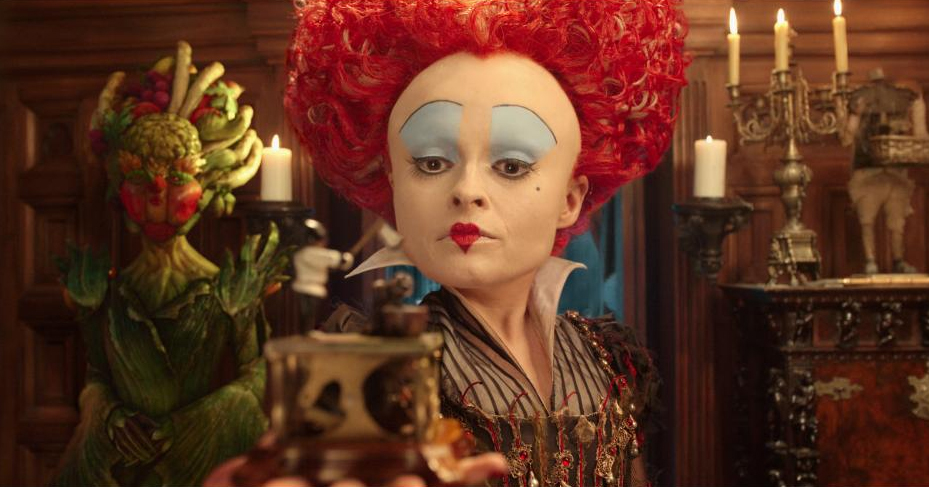
In U.S. online exclusive for D23.com, Tim Lammers talked with Helena Bonham Carter about reprising her scene-stealing role of The Red Queen for “Alice Through the Looking Glass.”

Read the entire D23 Q&A HERE.

Here’s a sample:

Tim Lammers: Was there a certain amount of reconditioning, vocally, since you screamed “Off with their heads!” quite a bit in “Alice in Wonderland”?

Helena Bonham Carter: It turned out to be very exhausting on the first day of production. I thought to myself, ‘I remember how to play this,’ and by lunchtime I didn’t have any voice left because I had been screaming for an hour (laughs). It was fun for a bit, then I realized, “I can’t do anymore and now I’m mute.”

TL: And was it exhausting, physically?

HBC: It was much more exhausting. The Red Queen is an exhausting character to play. I had a lot more to do and I think my part is actually bigger in this film. And, she’s unhappier. Can you believe it? And she’s even angrier.

“Alice Through the Looking Glass” opens in theaters nationwide Friday.

Tim Burton Book 2
Click book cover for info on how to buy!