Category Archives: Film

Interview: Ransom Riggs thrilled to enter ‘Peculiar’ world of Tim Burton

20th Century FoxBy Tim Lammers

Ransom Riggs certainly doesn’t mind being called a peculiar person, and not just for the fact that he wrote the novel “Miss Peregrine’s Home for Peculiar Children,” which spawned into a best-selling book trilogy. He’s peculiar in Hollywood, especially, because he’s a novelist, screenwriter and filmmaker, and not necessarily in that order.

Usually, you’ll find one or another, but hardly ever together.

And through an extraordinary series of events, “Miss Peregrine’s Home for Peculiar Children” — a little more than five years after it was published — will debut in theaters later this month as the latest film from acclaimed director Tim Burton. The novel has come a long way in a short time, considering that Riggs wrote it while trying to carve out a career as a filmmaker and writer. Usually, it’s the other way around, where a writer writes, and someday, maybe, their novel is adapted for the big screen.

But writing “Miss Peregrine’s” wasn’t a novel idea, so to speak, for Riggs. The genesis of the idea dated back before film school, when he started collecting vintage photos of peculiar people wherever he could find them. Eventually those people — children, in particular — made their way in Riggs’ story to an orphanage on an abandoned Welsh Island, where the titular Miss Peregrine watched over the kids, who were dubbed “Peculiars.”

“I was writing fiction in my spare time since I was a kid, and telling various iterations of a kid trapped in seemingly normal world who finds a door hidden within that world to another one, to an extraordinary place,” Riggs said in a recent phone conversation from New York City. “The photos just became another way for me to tell that story in a style that appealed to me, having just finished film school, because I had been trying to tell stories for three years using words and pictures. So, it was a natural thing to be writing a screenplay on one hand, and at the same time be writing an illustrated novel on the other.”
Tim Burton Book 2
Click book cover for info on how to buy!

The images were not drawings, though, but most of the time were haunting photos that helped Riggs tell his story.

“The photos became a fun resource to draw on when I got to the point of the story and said, ‘OK, I need to create this characters — who are they and what do they look like? — I needed a little grounding,” Riggs recalled. “Also, I liked using the photos because they are a document of a real, incontestably actual thing — a person or a place — in a story that is hugely fantastic and fictional. They just ground in a little bit of history in this story that otherwise might float off into the ether.”

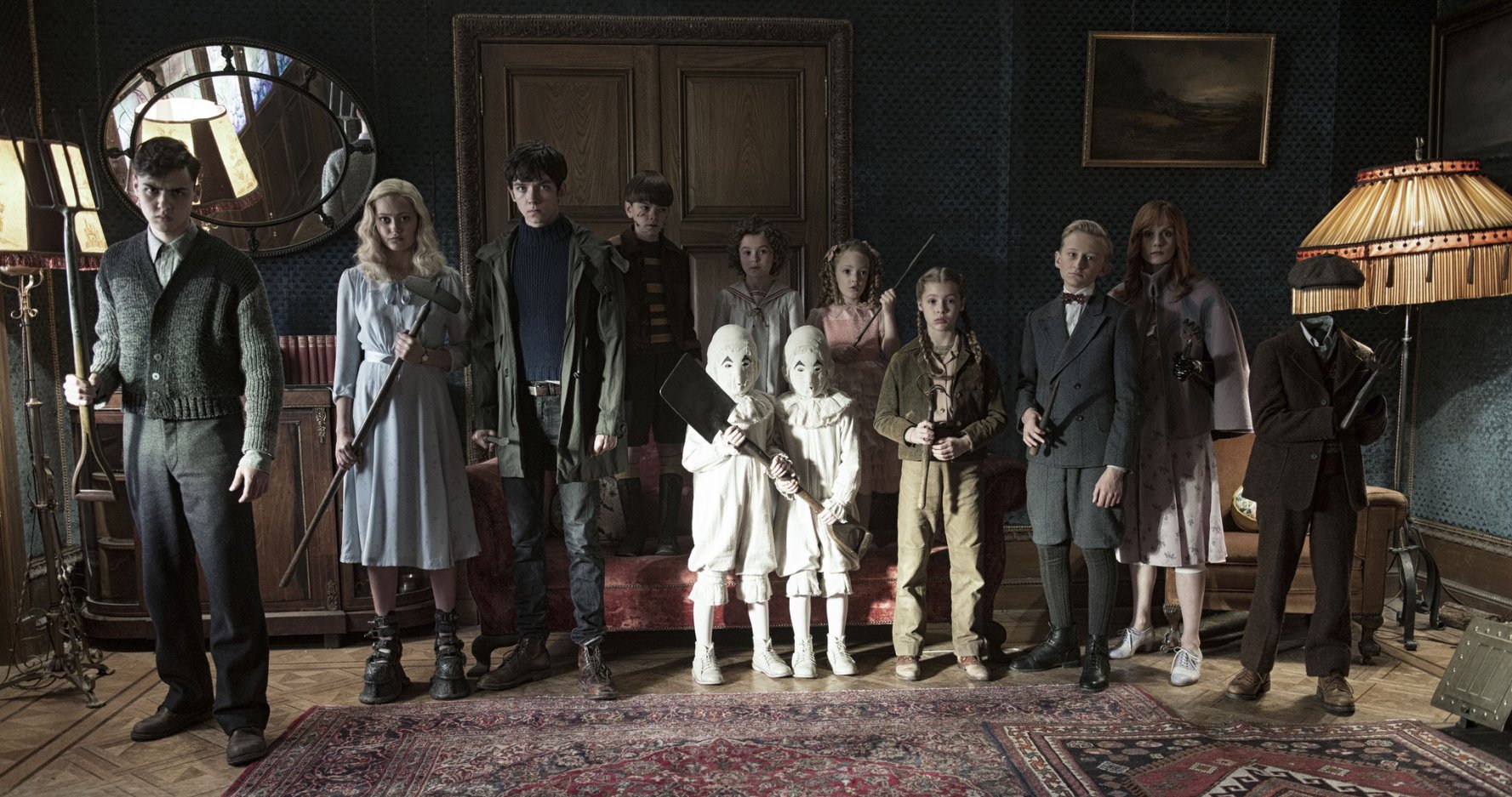
The opening of “Miss Peregrine’s Home for Peculiar Children,” in theaters nationwide Sept. 30, will no doubt assure Riggs that his characters didn’t float off into the ether. Grounding Miss Peregrine is the always charismatic Eva Green, while Asa Butterfield plays Jacob Portman, a Peculiar with the unique ability to see monstrous ex-Peculiars called “Hollowgasts.” The film also stars the likes of Samuel L. Jackson, Allison Janney and Judi Dench, while Jane Goldman adapted the screenplay. Burton’s longtime collaborator Derek Frey serves as one of the film’s executive producers.

Follow Tim Lammers on Twitter and Facebook

Of course, while some authors fret over how their work is going to be adapted, Riggs the filmmaker knows that try as anyone might, they are never going to 100 percent be able to adapt the written words in a novel for the big screen, because they are simply two different mediums. But coming from a similar background as Burton (“We both grew up in very sunny, suburban places dreaming of Gothic castles,” Riggs noted with a laugh), the writer knew his creation was in caring hands.

“I think the best adaptation from novel to film is not always the most faithful adaptation. In order to really make a great film that stands on its own as a piece of cinematic art, the filmmaker has to take the material and internalize it, and make it their own,” Riggs observed. “And yet, while the film diverges from the book in different aspects, Tim captures the spirit and the tone and the messages of the book in ways that I don’t think that any other filmmaker could have. I suppose that’s why Tim gravitated to book. He saw something in it that resonated with him.”

The interesting thing is, while Riggs knew there would be changes in the interpretation of “Miss Peregrine’s Home for Peculiar Children” from book to film, he was pleasantly surprised with the changes, even to the point where he found himself saying, “Why didn’t I think of that?”

“I constantly was thinking of that. Constantly,” Riggs said, laughing. “So many changes that Tim made — and they’re tweaks, really, there weren’t any enormous changes — were so smart. When something is finished, it’s fun to step back and think, ‘Wouldn’t it be funny if the extremely strong girl wasn’t this brawny teenager, but this little, Shirley Temple-like Kewpie Doll girl? Yes! That’s hilarious!’ When you’re making a film and you’re going to be confronted with the visuals of these characters 24 frames a second, making them look right and tweaking the characters to look a certain way is so important.”

September is a big month for Riggs. In addition to Burton’s “Miss Peregrine’s” film, author/photographer Leah Gallo’s “The Art of Miss Peregrine’s Home For Peculiar Children” (Quirk Books), which Riggs wrote the foreword for, was released this week. Then, on Saturday, Riggs’ latest novel, “Tales of the Peculiar” (Quirk Books) — which he describes as “an artifact from the Peculiar world” – hits the shelves.

“‘Tales of the Peculiar’ are like the ‘Grimm’s Fairy Tales’ for the Peculiars. They’re the beloved tales that they have grown up reading or hearing read to them by their Ymbrynes (who hide Peculiars from the world’s dangers) and reading to one-another,” Riggs explained. “In the second book in the series (‘Hollow City’), the tales become very important because they contain all sorts of coded messages and secrets about the location of important loops, and the identities of Peculiars and Ymbrynes, who can help them. There are actually a couple tales entirely told within the text of ‘Hollow City,’ and I had so much fun writing them that when I finished the three books, I wanted to write more.”
Movie reviews: ‘Hands of Stone,’ ‘Don’t Breathe’ on KQRS

The Weinstein Co.Follow @TimLammersFilms on Twitter

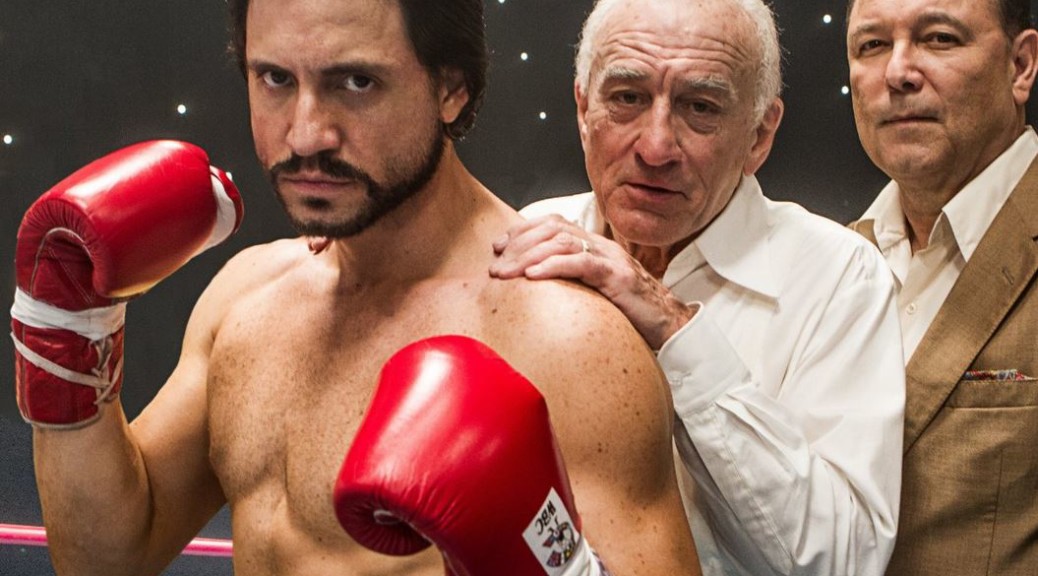
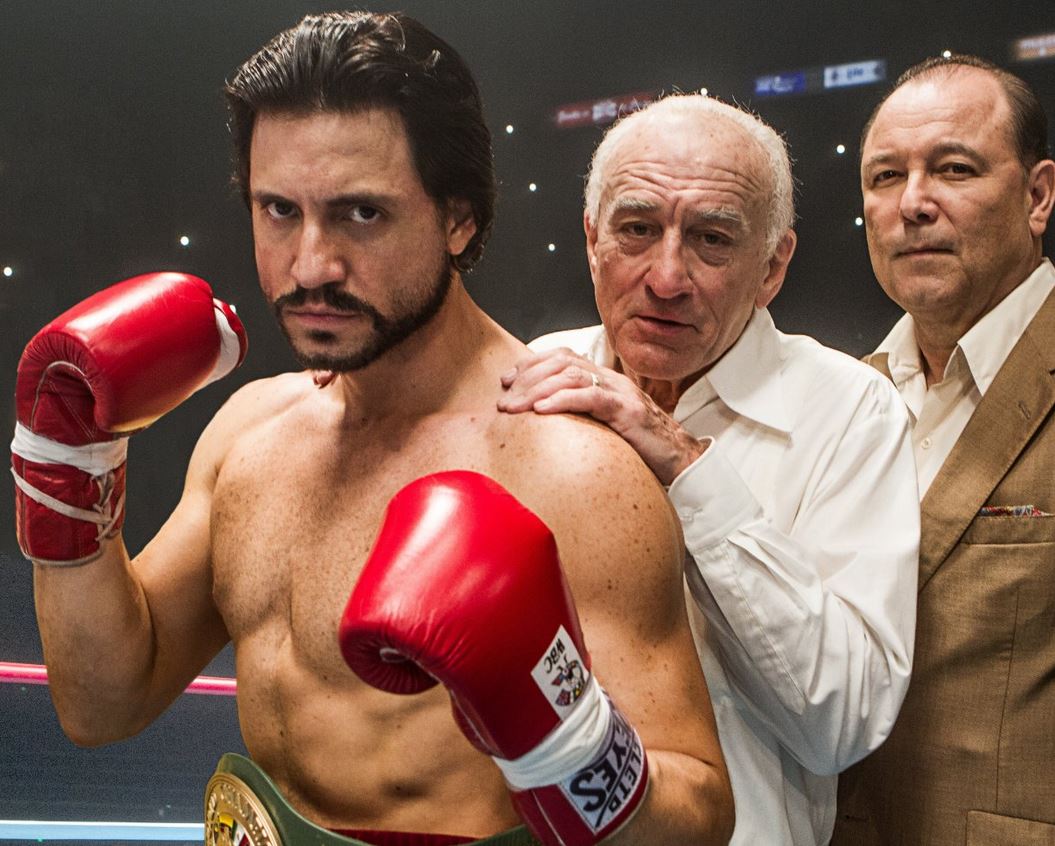
Tim Lammers reviews  Edgar Ramirez and Robert De Niro’s Roberto Duran boxing drama “Hands of Stone,” as well as horror thriller “Don’t Breathe” on “The KQ Morning Show” with Tom Barnard and the crew. Tim, Tom and the crew also weigh in on other movie releases and their box office prospects Hear the segment starting 10-and-a-half minutes in.

Tim Burton Book 2
Click book cover for info on how to buy!

Interview: Travis Knight talks quest behind ‘Kubo and the Two Strings’

Focus/LaikaFollow @TimLammersFilms on Twitter

If Laika has taught us one thing during its 10 years of existence as a stop-motion animation studio that’s produced the Oscar-nominated features “Coraline,” “ParaNorman” and “The Boxtrolls,” it’s that they respect the intelligence of the people watching their films. Yes, the visuals they painstakingly produce, frame by frame, are stunning to be sure; but first and foremost, Laika’s films are about story — and the studio’s latest offering, the epic Samurai family adventure, “Kubo and the Two Strings,” is no different.

“Our films really come down to the way we feel about our audience. We don’t view the films that we make as product,” Laika CEO and “Kubo” director Travis Knight said in a phone conversation from New York Thursday. “While what we’re in is show business — it’s show and business, and art and commerce — I think it’s important to not discount the art portion of it. In the end, we are making films and telling stories. We ask ourselves, ‘So who are we telling stories for? Who is the audience for these movies?’ We have nothing but the utmost respect for the audience of these movies.

“We will not pander, and we respect the intelligence and the sophistication of audience, and we don’t talk down to them. That comes through in our movies,” Knight added. “If you look at a lot of other movies, and that is not the case. That is not the way producers are looking at their audience. But for us, that is how we look at our audience. They are our families, these are our people, these are our children that we are making these films for. We love and respect them, and we want to make something worthy of them. That’s the approach we take to our movies.”

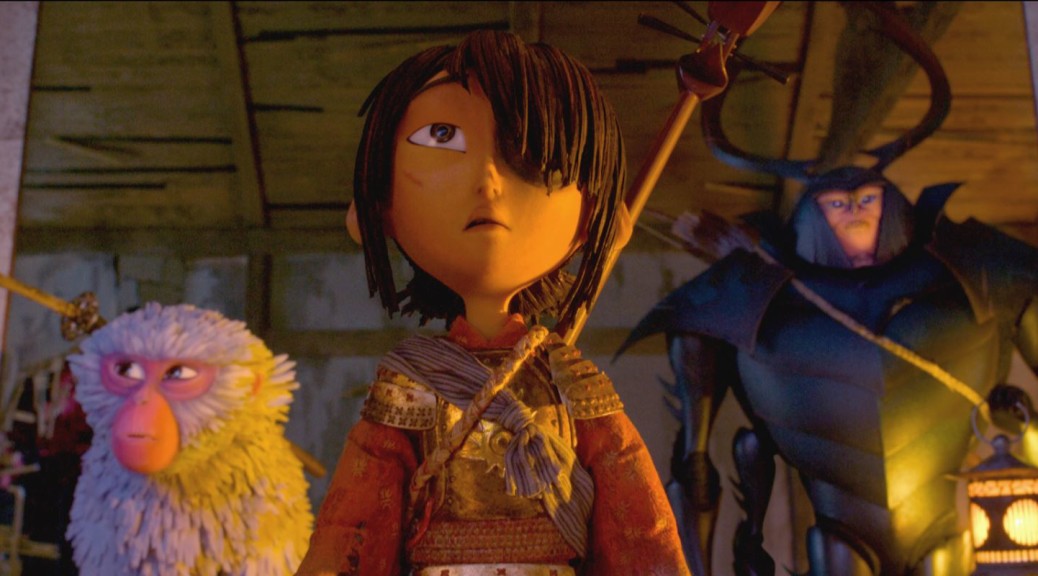
Opening Friday in theaters nationwide in 2D and 3D, “Kubo and the Two Strings” takes place in ancient Japan, where it follows the fantastical adventure of Kubo (voice of Art Parkinson), a humble boy with an ailing mother who accidentally summons spirits from his family’s past that target him to exact an age-old vendetta. His only hope of successfully combating the spirits comes in a quest to obtain three pieces of armor that belonged to his late father, the world’s greatest samurai warrior.

Joined by Monkey (Charlize Theron) and Beetle (Matthew McConaughey), the magically-gifted Kubo, armed with his stringed musical instrument known as a shamisen, embarks on the quest to face the spirits. But the quest isn’t merely about confronting the malevolent Moon King (Ralph Fiennes) and evil twin sisters (Rooney Mara); in the process, Kubo strives to discover the truth behind the loss of his father.

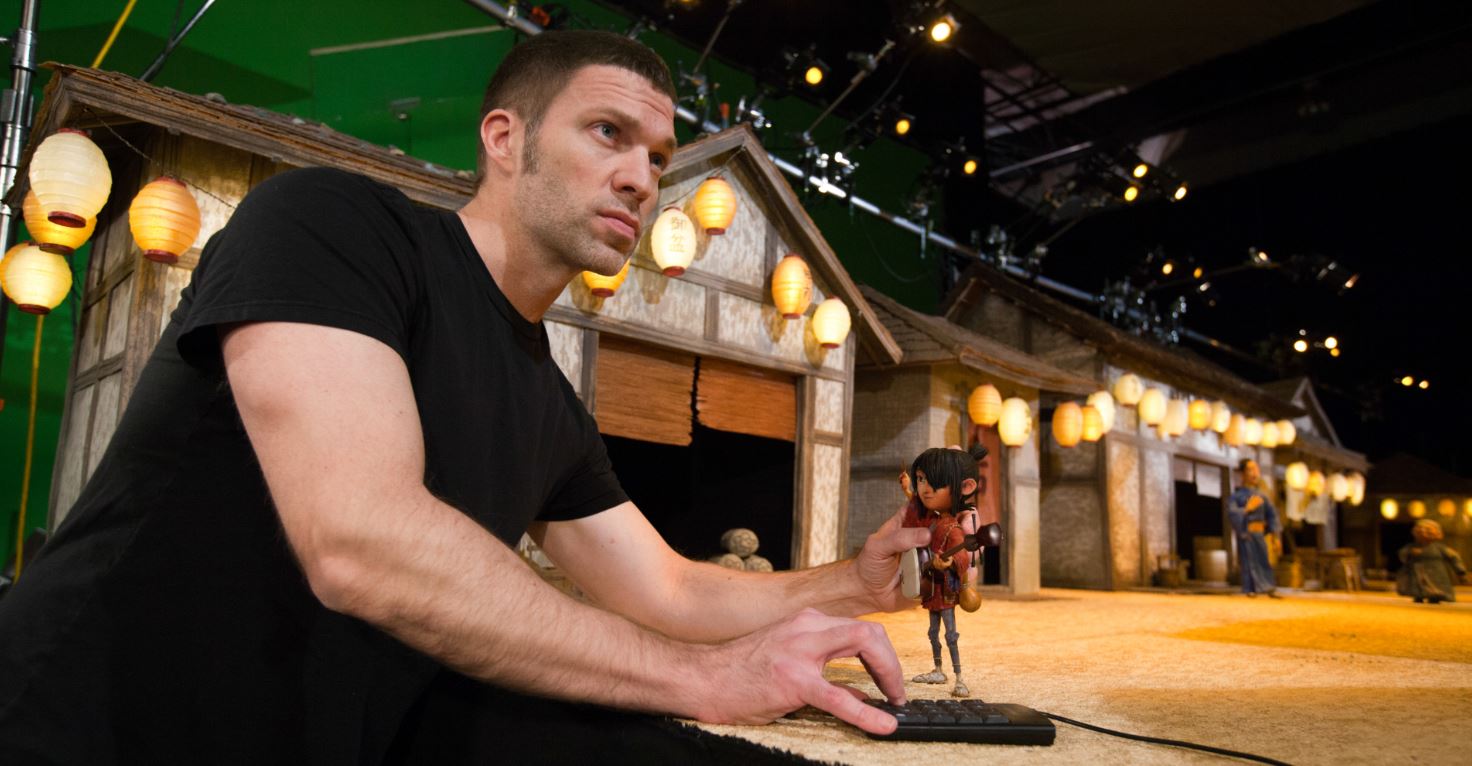
Marking Knight’s directorial debut (he’s also serves as producer and lead animator on the film), “Kubo and the Two Strings” took about five years to produce, a time period much longer than most computer-animated features. However, Knight feels that it’s not the extra time Laika’s artists put into their work that separates them from their computer-animated colleagues, but their ability to put a human imprint, so to speak, on their films.

“There is certainly a timelessness to stop-motion. When you look at a stop-motion film, you see the will and the skill, and the imagination of an artist who’s brought something to life with their hands,” Knight said. “The computer is an extraordinary tool, but there’s no humanity in a tool. It’s all in service of its operators. So, the stuff you see that comes out of comes out of computers is a bunch of ones and zeroes and  I think you can do amazing things with a computer — and we’ve seen it with exceptional effects and beautiful films — but it’s just sitting there, waiting to be worked with by its operator.”

Tim Burton Book 2
Click book cover for info on how to buy!

On the other hand, it’s about, well, the hands, as well and hearts and minds behind the drive of a stop-motion animator.

“Inherently in stop-motion there’s this hand-crafted quality, which really does give it its humanity,” Knight said. “These objects become alive because of the will and imagination of the animator. It’s magical to me because it almost evokes this primal feeling. My youngest son is 3 years old, and sometimes I watch him from across the room when he’s playing with his action figures, with one in each hand and doing little voices, creating scenarios – I recognize what he’s doing is telling stories. Nobody taught him to do that. That’s just an innate part of who we are as storytellers. That’s just who we are as humans.”

Laika, Knight said, is essentially an extrapolation of that.

“What you see with stop-motion films is that they’re essentially toys,” Knight said. “They’re dolls brought to life as if they have an inner-life and they’re moving around, and living and telling these stories — they’re creatures with their hopes and dreams. I think it really is evocative of imaginative play like when we were kids. Stop-motion taps into an aspect of that that is very primal.”

Ellen Ripley Alien Sixth Scale Figure

One of the many keys to the success of “Kubo” is that the story and the way it’s told is strikingly original. True, it is inspired by the such storytelling luminaries as Akira Kurosawa and Joseph Campbell — and to a greater extent how those storytellers influenced “Star Wars” — yet “Kubo” manages to forge its own identity.

“Unfortunately, originality is rare in this business these days,” Knight lamented. “We are in an industry right now where the pendulum has swung in one direction and where old presents are re-wrapped and offered up as new gifts. Old ideas are being dusted off and being regurgitated, but we’re fighting the good fight of trying to tell new and original stories, which has become increasingly difficult in this atmosphere.”

Movie reviews: ‘War Dogs,’ ‘Kubo and the Two Strings’ on KQRS

Warner Bros.Follow @TimLammersFilms on Twitter

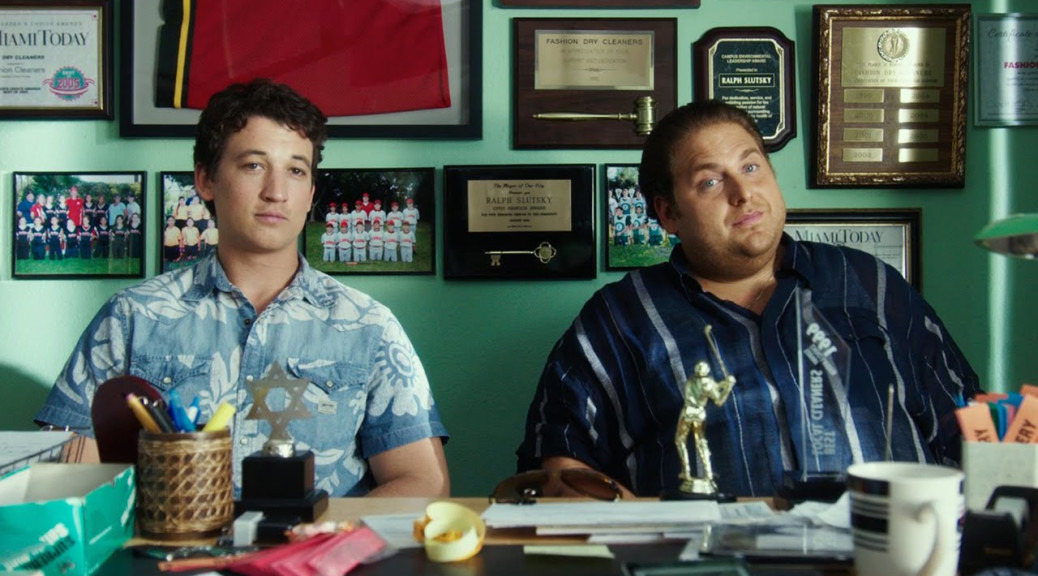
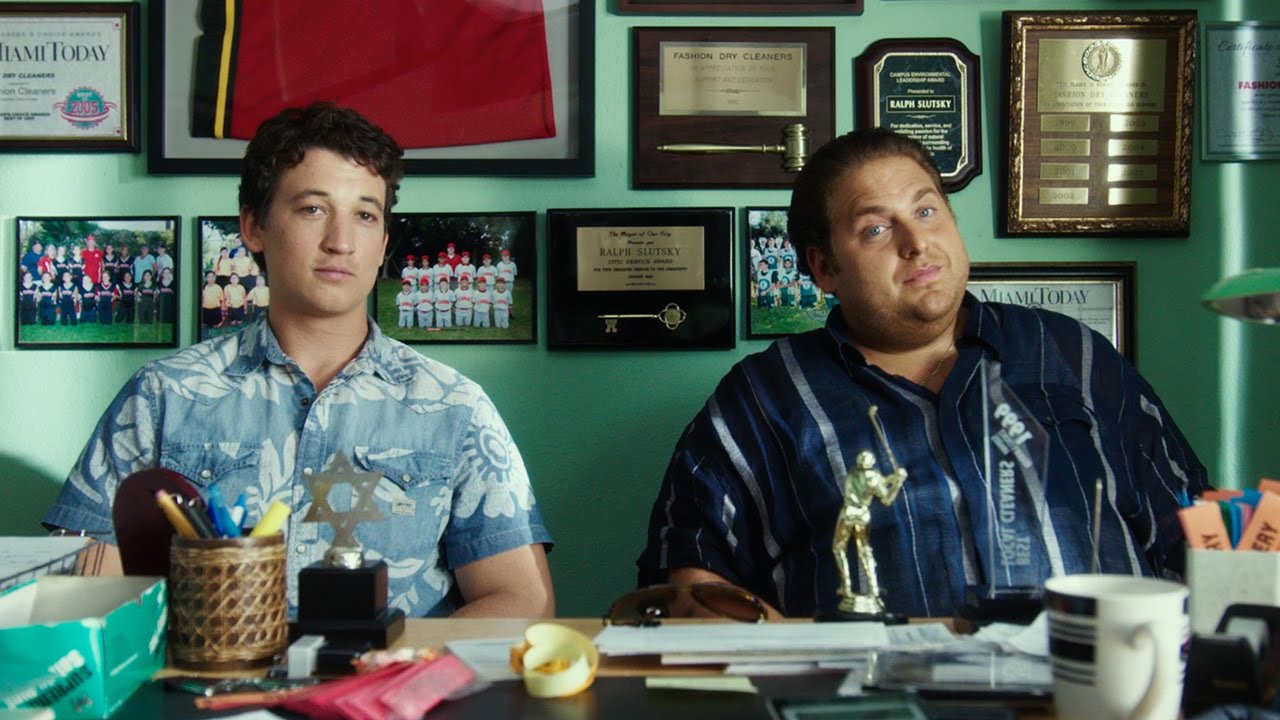
Tim Lammers reviews the Jonah Hill and Miles Teller true-life comedy drama “War Dogs,” as well as Laika animations studios stop-motion fantasy “Kubo and the Two Strings” on “The KQ Morning Show” with Tom Barnard and the crew. Tim, Tom and the crew also weigh in on the latest remake of “Ben Hur” and its box office prospects Hear the segment starting 7 minutes in.

Tim Burton Book 2
Click book cover for info on how to buy!