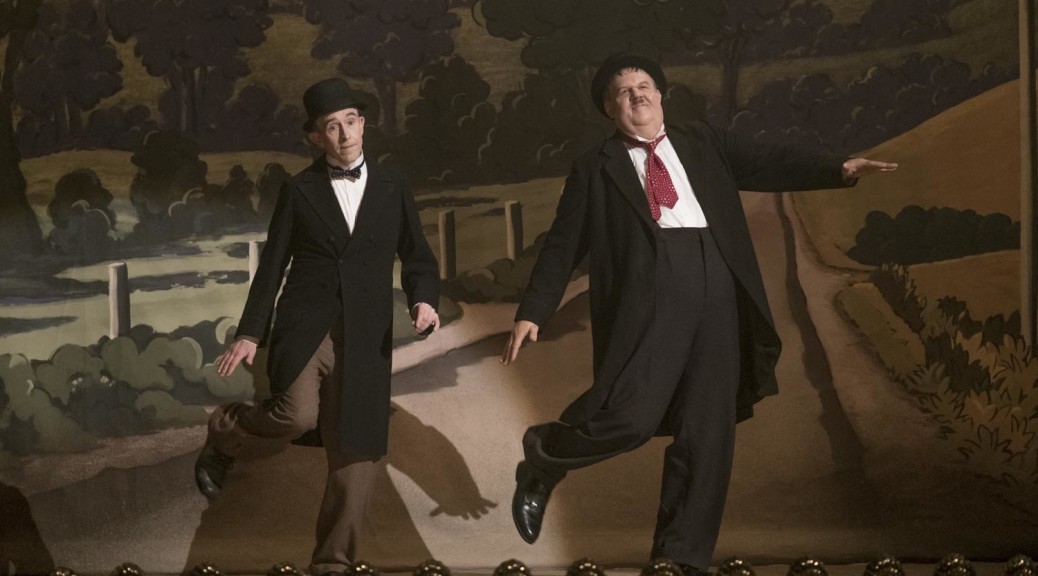
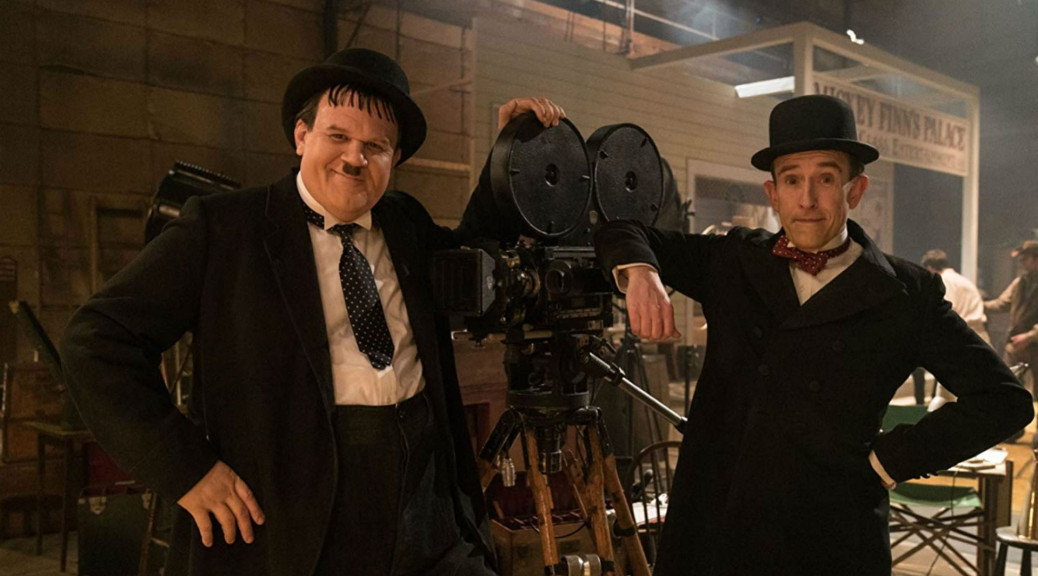
Stan Laurel and Oliver Hardy are completely realized by Steve Coogan and John C. Reilly, respectively, in “Stan & Ollie,” an unconventional yet memorable biopic that somehow sadly got lost in the madness of awards season.
Directed with a deft touch by Jon S. Baird, “Stan & Ollie” starts out in 1937, where the duo is filming their classic comedy “Way Out West,” but then shifts ahead to the 1950s where Laurel (Coogan) and Hardy (Reilly) are trying to get their stagnant film career back on track while embarking on a live theater tour of Europe.
Coogan feels like a Stan Laurel clone and Reilly completely disappears into the heavy prosthetic makeup to become Oliver Hardy — and you really do feel like you’re watching the real-life duo with a fascinating behind-the-scenes look at the highs and lows of their brilliant career before it sadly came to an end not long after the events of the film.
Just like the movies of the comedic duo’s films in their heyday, “Stan & Ollie” makes for good, clean family fun, as evidenced by the film’s PG rating, but ultimately it has as many poignant moments as it does funny ones.
Apart from showing how Coogan and Reilly masterfully recreate the comic routines of Laurel and Hardy, “Stan & Ollie” shows that yes, the duo, like practically every creative team throughout entertainment history, did have their share of problems with one-another. Despite their disagreements and sniping, however, Laurel and Hardy also loved each other, especially when they needed support the most with the realization that that their career as one of the world’s greatest comedy duos was coming to an end.
The interesting take on “Stan & Ollie” is that the film chronicles a time in their career that not a lot of people know about with their European stage tour, which shows, furthermore, that they were far from being has-beens. In fact, they were spot-on hilarious until the very end, despite Hardy’s deteriorating health.
And while the film could have easily ended on a down note because of Hardy’s troubles, Baird’s decision to show the courage the comedian displayed despite knowing his days were numbered ends up making “Stan & Ollie” an inspiring tale. It’s a fitting way to end the film considering how much Laurel and Hardy inspired the work of countless comedians to this very day.
Lammometer: 9 (out of 10)
Tim Lammers reviews movies weekly for The KQ92 Morning Show,” “KARE 11 News at 11” (NBC), WCCO Radio, WJON-AM, KLZZ-FM, “The Tom Barnard Podcast” and “The BS Show” with Bob Sansevere.
While the names of classic comedy actors Stan Laurel and Oliver Hardy may only be vaguely familiar to the newest generation of comedy fans as the new biopic about them hits theaters, that doesn’t mean audiences have never seen the work of the dynamic duo. In fact, John C. Reilly, who stars as Hardy opposite Steve Coogan’s Laurel in “Stan & Ollie,” said fans have experienced more Laurel and Hardy comedy than they’ve realized.
“If you were to ask me even before I did this movie, ‘Is Oliver Hardy a part of your acting?’ I would have said, ‘Absolutely,'” Reilly said in a recent phone conversation from Los Angeles. “I reference him all the time in ‘Wreck-It Ralph.’ There’s tons of Laurel and Hardy in that, from the sounds I make when I get clonked over the head or whatever it is.”
Reilly, who is coming off the global success of his “Wreck-It Ralph” sequel “Ralph Breaks the Internet,” added that comedians and actors all over the world really appreciate Laurel and Hardy to this day because they “figured out some universal truths about comedy.”
“If you look at their work, they don’t talk about who is the president at that time or whatever little story of the day is going on, they talk about the human experience. The quandaries they get in are not tied to a place and time; they’re just the eternal struggles of human being,” Reilly observed. “Even though comedy can be very hard to translate from one culture to another, these guys were world famous at a time when it was not so easy to cross borders with your work … there was a real sweetness and humanness to their work that made it really relatable to people.”
In a separate phone conversation, “Stan & Ollie” director Jon S. Baird said he hopes the film will launch a new appreciation of Laurel and Hardy’s work.
“The love of these guys has gone back a long, long way … Laurel and Hardy’s DNA is throughout comedy,” Baird said. “If you look hard enough for it, it’s there in every act … If you ask all the main comedians working at the moment who their influences are, Laurel and Hardy would be in there. So hopefully this film will reintroduce people to them or introduce people to them because they’ve been so influential and so important to comedy since they started.”
Opening in theaters in limited release Friday and expanding next month, “Stan and Ollie” is not a standard biopic in that it largely focuses on Laurel and Hardy in the twilight of the comedy duo’s career as the two embarked on a theater tour across Europe in the 1950s. With their career in film seemingly behind them, Laurel and Hardy throughout the tour have their hopes pinned on meeting with a financier they believe will bankroll their comeback picture years after the duo dominated the silver screen.
Oddly enough, Coogan and Reilly’s working relationship on “Stan & Ollie” mirrored Laurel and Hardy’s in that they’ve never worked together before when they signed on to do the film.
“If you know their history, they were plucked from obscurity. They were thrown together and didn’t know each other and didn’t have an act,” said Reilly, who has already earned Critics’ Choice and Golden Globe nominations for his role. “They came from very different backgrounds — Stan was from England and Oliver was from Georgia. The fact is, it was almost a decision of convenience on the part of Hal Roach when he lost Harold Lloyd when Harold went off to start his own studio. He was desperate for another act and said, (let’s put together) a fat guy and the skinny guy. It didn’t have any more subtlety than that when he made the decision.”
As a result of that decision, however, Reilly said Roach created “one of the most miraculous performing partnerships in the history of the world.”
“I can’t think of another partnership that was exclusive and had the level of quality over the number of films that these guys had,” Reilly said. “They really created something for the ages.”
Reilly was clearly humbled by the opportunity to play Hardy, and while he didn’t go so far as to say he channeled the comedy great (audiences will likely beg to differ when they see how the actor virtually disappears into the prosthetic makeup used to create Hardy), he felt there were times when he felt the magic coming through. He said he finally had the confidence that his portrayal of Hardy was working when he and Coogan performed the duo’s routines in front of the 400 extras for film’s live theater scenes.
“I looked out at the audience I could see this woman’s face just lit up with joy. We brought so much joy to that person that when I came off-stage, I got really emotional and started crying,” Reilly said. “I was thinking, ‘I may never be Oliver Hardy — and no one ever will — but at least I’m carrying the torch for him, and I’m bringing the same kind of joy that he brought to people.’ That was a moment that I felt, ‘Well, we’re doing something right. We made that lady really happy today.'”
Baird said if Coogan and Reilly had any doubts of whether they could pull off playing Laurel and Hardy, those doubts were erased when “Stan & Ollie” screened for some very discerning audience members.
“One of the major successes of the film was not only showing it to fans, but super-fans; people who have dedicated their lives to Laurel and Hardy. Trust me, there are plenty of them out there,” Baird said. “Also, there are surviving family members, like Stan’s great-granddaughter, Cassidy Cook, who we had at the London premiere. When they say to you, ‘I forgot I was watching actors. I thought I was watching my great-grandad,’ that’s an incredible thing to hear.”
Tim Lammers reviews movies weekly for The KQ92 Morning Show,” “KARE 11 News at 11” (NBC), WCCO Radio, WJON-AM, KLZZ-FM, “The Tom Barnard Podcast” and “The BS Show” with Bob Sansevere.
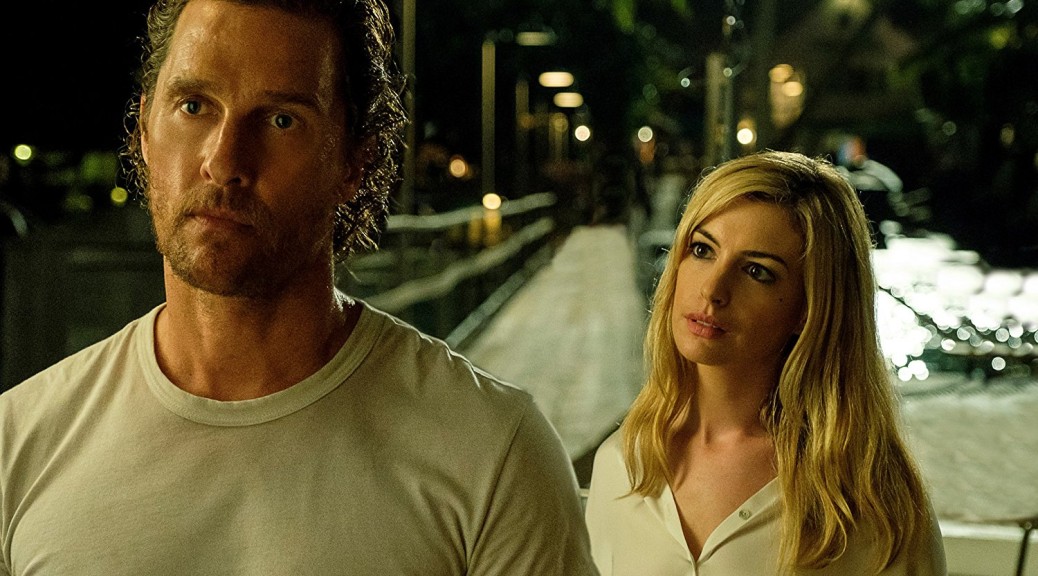
The first movie misfire of 2019 is here with “Serenity,” an embarrassingly bad sci-fi tinged mystery that completely squanders the talents of a top-notch ensemble cast including Matthew McConaughey, Anne Hathaway, Jason Clarke, Djimon Hounsou and Diane Lane.
The set-up seems simple enough. McConaughey plays Baker Dill, an Iraq War veteran struggling to make ends meet as a tuna fisherman off the coastal waters of Florida. His fortunes appear to change, however, when his ex-wife, Karen (Hathaway) turns up on his boat one day with a proposal to kill her new husband, Frank (Jason Clarke), a sadistic drunkard with criminal connections. Even though he’s offered $10 million to do the deed, Baker is hesitant to carry out the task until he finds out the vicious contempt Frank holds for his son with Karen.
AUDIO: Listen to Tim’s review of “Serenity” with Tom Barnard on “The KQ Morning Show.” The segment begins at 3-minute mark.
The strange thing about “Serenity” is that it begins as a potboiler mystery tale, but then takes a hard-left turn into an alternate reality that includes wayward characters who make little sense, as well as revealing scene where McConaughey taking a skinny dip for apparently no other reason than show audiences to show off his bare backside.
Once it becomes clear the direction in which “Serenity” is headed, the film feels like no more than an inept attempt to capture the mysterious vibe of a “Black Mirror” episode – specifically the show’s acclaimed “U.S.S. Callister” tale – but the end result doesn’t even come remotely close. The tone is bizarre, the writing is bad and the acting by Hathaway and McConaughey is especially hideous (in sharp contrast to their polished performances opposite each other in Christopher Nolan’s“Interstellar”).
In the end, “Serenity” is the perfect example of how actors – even Oscar winners – can’t act their ways out of bad scripts. Instead, McConaughey and Hathaway have earned the distinction of being the first two “worst acting” front-runners vying for next year’s Razzies.
Lammometer: 2.5 (out of 10)
AUDIO: Tim reviews “Serenity” with Paul Douglas on “Paul & Jordana” on WCCO-AM. The segment begins at the 11-minute mark.
Tim Lammers reviews movies weekly for The KQ92 Morning Show,” “KARE 11 News at 11” (NBC), WCCO Radio, WJON-AM, KLZZ-FM, “The Tom Barnard Podcast” and “The BS Show” with Bob Sansevere.
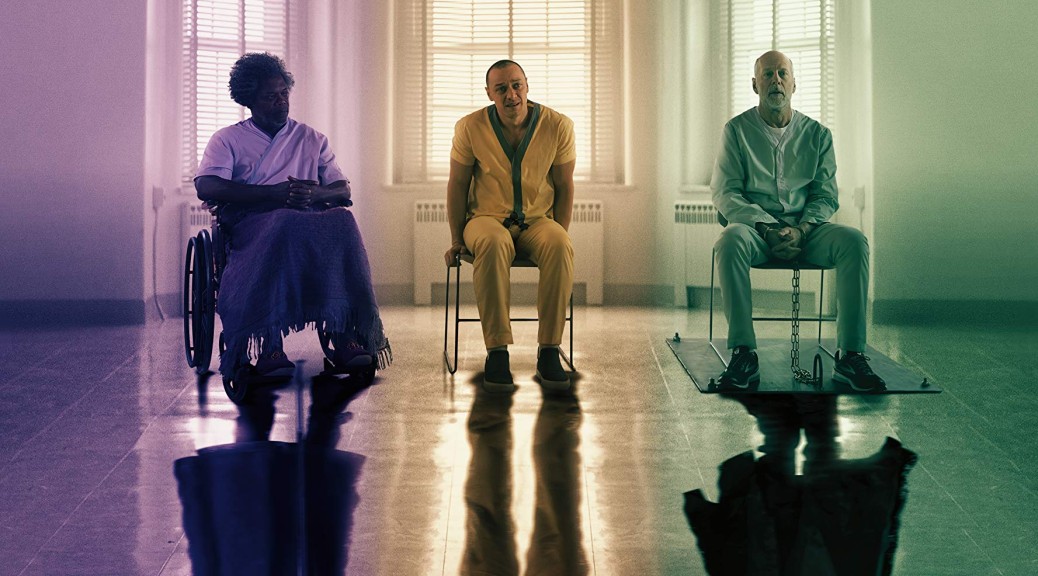
Writer-director M. Night Shyamalan scores an impressive hat-trick with “Glass,” the long-awaited sequel to his 2000 mystery drama “Unbreakable” that was bridged by his hit 2016 horror thriller “Split.”
VIDEO: See Tim’s review of “Glass” and “Stan & Ollie” with Adrienne Broaddus on KARE-TV.
Released in 2000, “Unbreakable” essentially examines an obsessive comic book art dealer’s (Samuel L. Jackson) idea that superheroes — like Bruce Willis’ David Dunn — walk among us and will go to any means necessary to confirm his beliefs; while 2016’s “Split,” as it turns out, reveals there are supervillains — like James McAvoy’s Kevin Crumb, who suffers from dissociative identity disorder — too, like the Beast – one of Kevin’s 24 personalities.
“Glass,” a name assumed by Jackson’s character in “Unbroken” because of his brittle bone disease, takes place, appropriately, 19 years after the events of the first film, where David realizes that he must confront his fellow meta-human who wreaking havoc across Philadelphia. Getting in his way, though, is a Dr. Ellie Staple (Sarah Paulson), who finds a way to institutionalize David, Kevin and Glass in a bid to convince each of them that their perceived powers are just figments of their imaginations.
AUDIO: Hear Tim’s review of “Glass” with Tom Barnard on “The KQ Morning Show.”
The interesting thing about “Unbreakable” is that is really was ahead of its time with its dark superhero narrative — considering it came out after DC had its run and faded in 1990s, and just as Marvel’s X-Men and Spider-Man showed there was interest in the moviegoing public that the Marvel Cinematic Universe could finally materialize with Iron Man, Thor, Captain America and the Avengers.
Oddly enough, Shyaman’s inventive superhero movie reemerges at a time where there’s been a proliferation of them, yet amazingly, “Glass” still sets itself apart thanks to filmmaker’s penchant for plot twists and real-world narrative, which is enhanced by the terrific performances of McAvoy, Willis and Jackson. (Plus, in a class move, the writer-director brings back nearly every member of “Unbreakable’s” cast, save Robin Wright, whose character’s absence is explained in the story.)
Fans of “Unbreakable” and “Split” are going to love “Glass,” as Shyamalan’s sweeping, twisty and ambitious narrative finally comes together in grand fashion after two decades. The film will no doubt be confusing, though, to those who’ve never seen “Unbreakable” and/or “Split,” and Shyamalan is putting a lot of trust in his audience as such by not including any sort of prologue. Naturally, there are flashbacks to the previous films in “Glass,” which aids the story at key points in the film. If at all possible, everyone, whether they’ve seen “Unbreakable” and “Split” or not will greatly benefit by revisiting the films before seeing “Glass.”
Ultimately, all roads lead to the smashing ending of “Glass,” where you realize that despite third chapter’s tidy conclusion, Shyamalan is not done telling his comic book tale just yet.
Lammometer: 7.5 (out of 10)
Tim Lammers reviews movies weekly for The KQ92 Morning Show,” “KARE 11 News at 11” (NBC), WCCO Radio, WJON-AM, KLZZ-FM, “The Tom Barnard Podcast” and “The BS Show” with Bob Sansevere.