Category Archives: Interviews

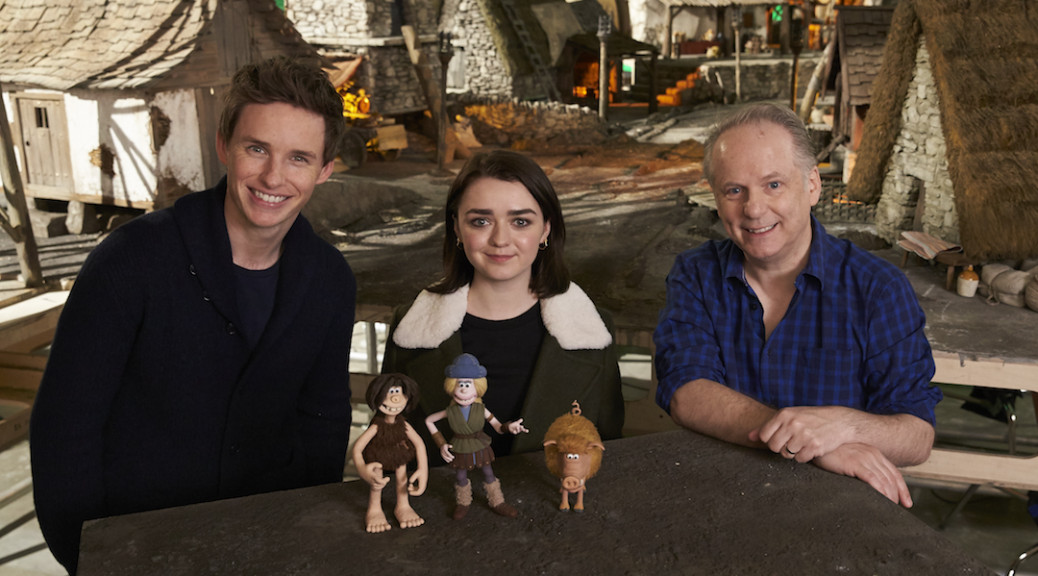
Interview: Nick Park talks Aardman stop-motion comedy ‘Early Man’

For a movie about cavemen, the new Aardman Animations stop-motion animation feature “Early Man” is, ironically, quite evolved. In technical terms, it’s a far cry from writer-director Nick Park’s early “Wallace & Gromit” shorts from the late 1980s and 1990s, when Park himself shot the stories on film and even had a big hand, so to speak, in making the characters move.

And while digital technology has eased the burden of the ever-so-precise medium of stop-motion filmmaking, Park found himself taking a step backward to create the opening scene of “Early Man.” Beginning in prehistoric times, the opening scene is a tribute to stop-motion pioneer Ray Harryhausen that features dinosaurs appropriately named Ray and Harry.

“The whole movie was shot with digital cameras, so it looked immaculate when we shot the whole dinosaur sequence,” Park said in a recent phone conversation from San Francisco. “The sad thing is, we had to distress the footage to make it look like film shot in 1970. So, ironically, we had to put digital dust and grain on the scene and had to make the colors look a bit more like slightly old Technicolor. It seemed criminal to do that since the scene looked so wonderful at the beginning, but that’s what we needed to do to make it look like a Ray Harryhausen movie.”

“Early Man” tells the story of Dug (voice of Eddie Redmayne), who along with his pet warthog Hognob (Park) and tribe, have their primitive existence interrupted by progress, as the villainous Lord Nooth (Tom Hiddleston) and his minions from the Bronze Age City begin to expand his kingdom into the forest. Before he can do so, though, Dug lays down a challenge: If he and his tribe can defeat the Bronze Age City’s formidable soccer club in a match, Nooth must let his primitive neighbors live in peace. The problem is, Dug and company don’t know a thing about soccer, even though his ancestors by happenstance invented the sport.

Dug (voice of Eddie Redmayne) and Hognob (Nick Park) in 'Early Man' (photo Lionsgate

Opening in theaters nationwide on Friday, “Early Man” also stars Maisie Williams (“Game of Thrones”) as the voice of Goona, a spunky citizen of the Bronze Age City who helps Dug’s tribe find their full potential as soccer players.

Given the lighter tone of previous Aardman hits like “Chicken Run,” the Wallace & Gromit adventure “Curse of the Were-Rabbit” and “Shaun the Sheep Movie,” Park, who has won four Oscars for his stop-motion work, knew he had a great way in to lightening the proceedings of “Early Man.” The story is inspired by the beloved worldwide sport of soccer — better known as football outside of the U.S.

“It just struck me as idea — I’m always waiting for the ‘lighting strikes’ ideas that make me stand up and want to make me make the film,” Park said. “I didn’t want to just make a caveman epic. It had to have some sort of different, off-the-wall idea that makes it a bit quirky and a bit Aardman. That’s when I had the idea of, ‘What if cavemen played sports?’ Then I began to think that maybe playing sports was a way of civilizing insolence. If you think about it, it’s true that primitive aggression is channeled into the tribalism that surrounds a sport like soccer.”

Of course, the aggression we see in the family-friendly “Early Man” is very playful and done in a comedic sort of way, which is a hallmark of every Aardman Animations production to date. Rooted in cheeky British humor, Aardman’s films separate themselves from other stop-motion works not only in tone, but in style, given that the characters are molded from clay (hence the reason the company’s films are often referred to as “claymation”).

“Why I love stop-motion with clay, is that it’s done in this sort of style that has kind of humor and charm that comes with it,” Park said.
Tim Burton Book 2
Click book cover for info on how to buy!

And if Aardman keeps that sense of humor and charm that separates itself from most movies, Park is confident that the art of stop-motion will endure, despite ever-burgeoning technological advancements in the field of computer-generated animation.

“I remember 20, 30 years ago with the rise of CGI, we would think, ‘How many days do we have left?'” Park said. “But today, there’s a great flourishing of stop-motion, still, with studios out there like Laika, and filmmakers like Tim Burton and Wes Anderson — who is getting ready to release another stop-motion film — it’s incredible. As for Aardman, I know our style stands out against all those CG films, and there are some great CG films out there.”

Tim Lammers reviews movies weekly for The KQ92 Morning Show,” “KARE 11 News at 11” (NBC), “The Tom Barnard Podcast” and “The BS Show” with Bob Sansevere.

Copyright 2017 DirectConversations.com
Interview: Screenwriter David Scarpa talks ‘All the Money in the World’ reshoots

Late fall and early winter is generally a busy time in the movie business. Studios not only prepare to release big films for holiday season moviegoers, but debut awards season contenders that will hopefully go on to vie for a bevy of accolades, including Oscar gold. But for the true-life drama “All the Money in the World” — which chronicled the harrowing kidnapping of the grandson of legendary oil tycoon J. Paul Getty — making the film’s Christmas Day release date was truly a gift.

For screenwriter David Scarpa, being involved in “All the Money in the World” was certainly the most interesting project he was involved in, and not just because of the film’s compelling subject matter. No, it’s more about how as a filmmaker you can think your movie is good to go for its release — that is, until the whole world comes crashing down upon it.

“There are many numbers of crazy stories that happen in the course of a movie’s production, but this is certainly the most crazy public thing that I can think of and that I’ve been a part of. People always have their crazy stories, but this was pretty tumultuous,” Scarpa said in a recent phone conversation from Los Angeles. “What’s really weird is how smooth it worked out. Usually when there are problems with a production, it’s usually a crazy set, with some kind of a disaster or weird setback or weird revolution in the middle of the shoot or something. But in this case, everything happened when everybody thought they were in the clear, and we were about three weeks from our release, and that’s when it all went down.”

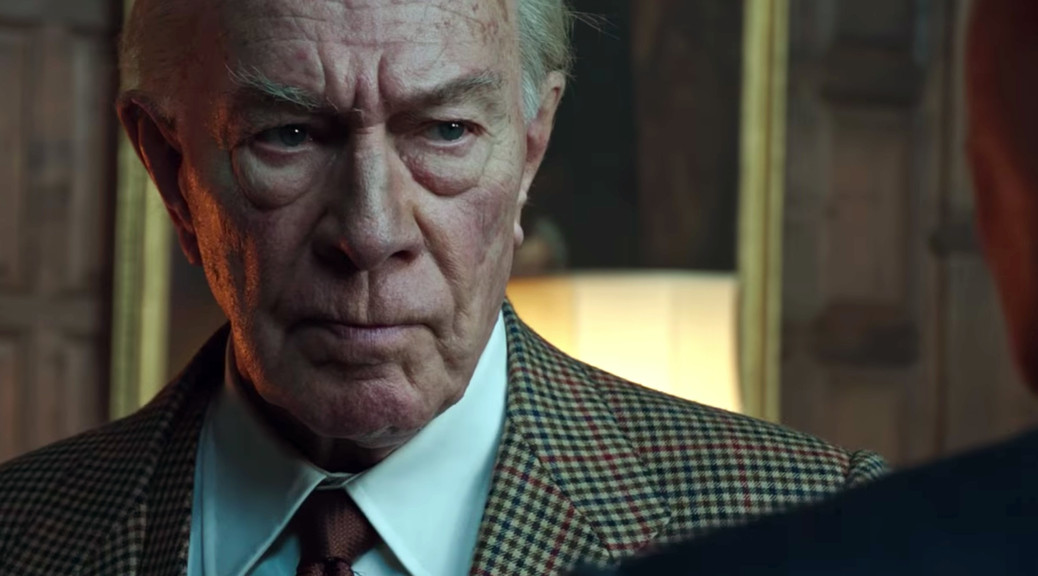
The tumultuous event Scarpa is referring to is the sexual misconduct scandal that rocked Hollywood regarding actor Kevin Spacey, who originally played the pivotal role of the elder Getty in “All the Money in the World.” Realizing how Spacey’s involvement would greatly hamper the completed film’s box office and awards prospects, director Ridley Scott decided in an unprecedented move to cut his performance from “All the Money in the World” and recast veteran Oscar-winning actor Christopher Plummer in the Getty role.

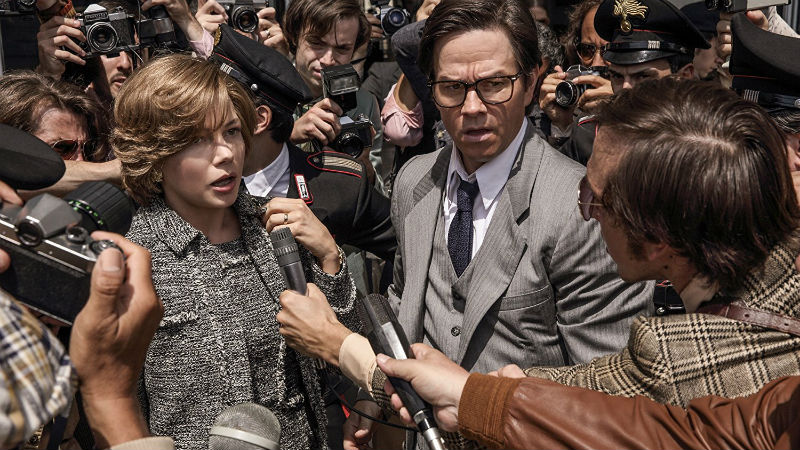
Michelle Williams and Mark Wahlberg in 'All the Money in the World' (photo Sony Pictures)

But given the fact that the Spacey scandal broke in late October, time was definitely not on the production’s side. Amazingly, all the pieces came together. Scott reshot the film’s Getty scenes with Plummer and stars Michelle Williams and Mark Wahlberg in a nine-day stretch in late November, and a cut of the film was assembled in time for an 11th hour screening for Golden Globes members in early December. The hard work paid off, as Plummer, Williams and Scott all earned Globe nominations, effectively boosting the film’s prospects for forthcoming nominations for the 90th annual Academy Awards.

For Scarpa, the experience proved to him that if something as tumultuous is going to happen to a production, a director like Scott is the person you’re going to want at the helm.

“Ridley has a team that he consistently works with, when he came back and said, ‘I can do this and do it pretty quickly,’ I’m sure he picked up the phone and called his right-hand man and producer, Mark Huffman, and asked, ‘Can we pull this off?’ Mark said, ‘Yes,’ and after that, it was really there was no question that they were going to be able to do it. For me, once they said they were got the actors back and they were going to do it, I was pretty confident that that they were going to get it done.”

As the film’s screenwriter, Scarpa was naturally involved in the reshoots. Nothing was changed from his original script, and he sent to Plummer only the dialogue that was shot with Spacey and in the film.

“We were warned by our editor, Claire Simpson, that the scenes we were shooting for the movie were going to have to conform to the Kevin Spacey movie in order to make our release date,” said Scarpa, who adapted his screenplay from John Pearson’s 1995 book “Painfully Rich: The Outrageous Fortunes and Misfortunes of the Heirs of J. Paul Getty.”

Darth Vader - Lord of the Sith Star Wars Premium Format(TM) Figure

However, the screenwriter sent quite a bit more to the veteran “Beginners” Oscar winner — and Plummer naturally proved that he’s anything but a beginner when it comes to acting.

“Initially they asked me to send what is called ‘continuity,’ which is only the dialogue that made it into the cut of the Spacey version of the movie, but instead I sent all of the scenes, which included everything including the stuff that was cut into the Spacey version. Plummer actually went off and memorized all of them and used that,” Scarpa said. “As a result, there’s actually a lot more Getty material in the Plummer version than there is the Spacey version. Parts of individual scenes that got cut are now back in the movie because Plummer’s so good at them.”

“All the Money in the World” is currently playing in theaters nationwide. Scarpa’s next project will be an updated version of the classic film, “Cleopatra.”

Tim Lammers reviews movies weekly for The KQ92 Morning Show,” “KARE 11 News at 11” (NBC), “The Tom Barnard Podcast” and “The BS Show” with Bob Sansevere.

Copyright 2017 DirectConversations.com
Tim Burton Book 2
Click book cover for info on how to buy!

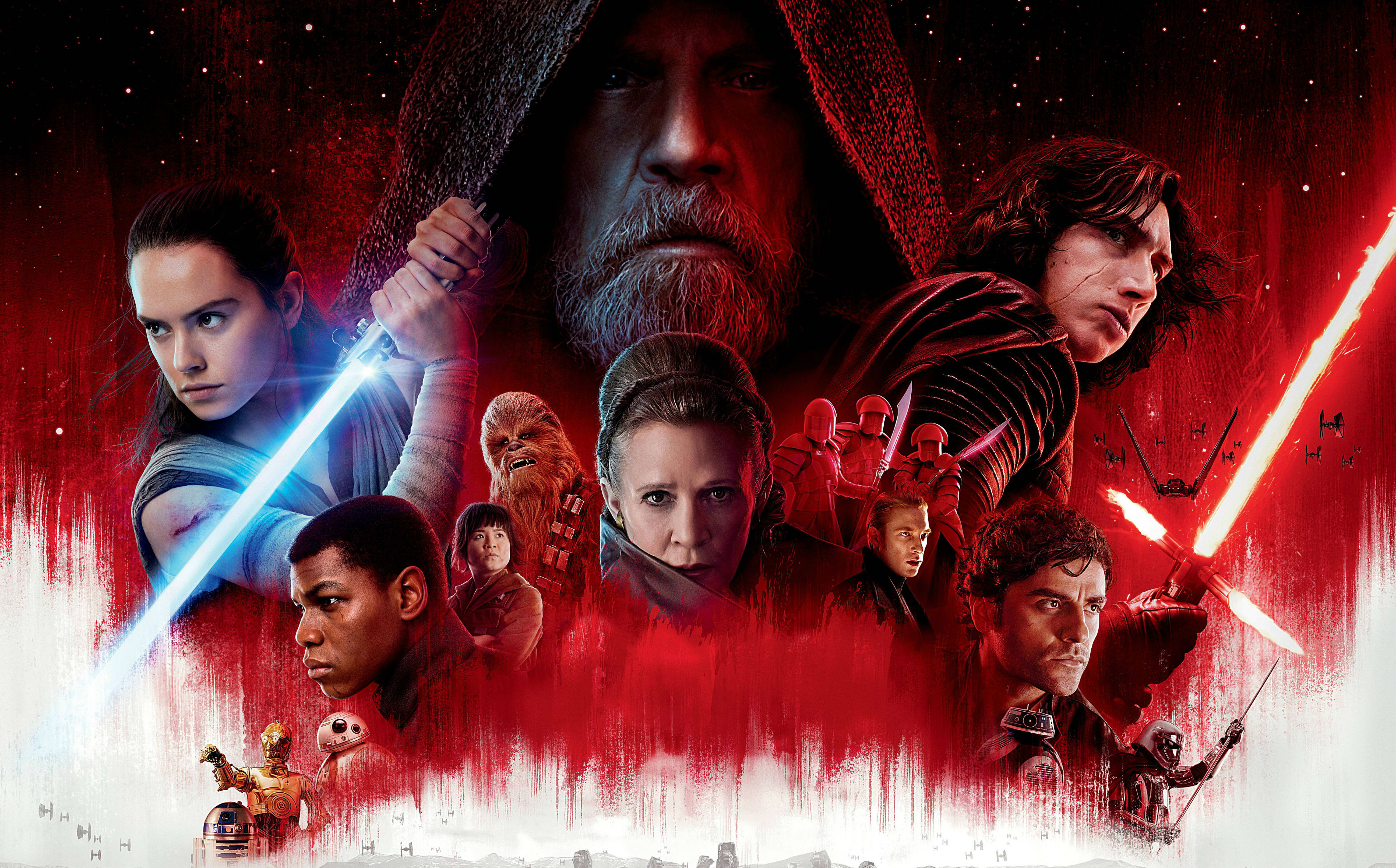
Interview: Rian Johnson talks evolution of ‘The Last Jedi’

Spoiler alert: This article highlights some key scenes in “Star Wars: The Last Jedi.”

If the success of writer-director Rian Johnson’s worldwide blockbuster “Star Wars: The Last Jedi” proves anything, it shows that if you have the passion, a person who works hard enough can someday venture not only to the pinnacle of his craft, but in some instance, to a galaxy far, far away.

For Johnson, his work for four years on the eighth film in the Skywalker family saga was born of the wonder inspired by the first “Star Wars” trilogy when he was young. He shared that passion in an incredible gesture the night before the first “Last Jedi” panel at “Star Wars” Celebration in Orlando, Florida, in April, in an unprecedented move, Johnson made an unscheduled appearance where hundreds of fans were camping out overnight for a spot to see the panel and the first trailer for film, meeting with each fan there individually. As it turns out, those one-on-one meetings proved to be one of the pivotal moments of Johnson’s entire “Star Wars” adventure.

“There were two parts to this whole experience. There was making the actual film and then there’s putting the film out there to the world — and that second part at Celebration was such a highlight and almost like a turning point for me,” Johnson recalled in a phone conversation Tuesday from Los Angeles.

“Coming into Celebration I was a little nervous. I was scared to go up on stage and scared of judgment. I was scared about what people were going to say about this ‘new guy’ making this movie,” Johnson said.  “So, going out that night and just meeting fans face-to-face made me realize, ‘This is me. This is us. This what I’ve been since I was a kid. This isn’t some big, scary mass of folks, this is just the same type of ‘Star Wars’ fan as I have been since a kid.’ Everyone was so kind and so wonderful, that the next day when I got up on stage in front of all of them, I felt like I was standing in front of a huge group of friends.”

Photo: Disney/Lucasfilm

Of course, there were big differences between Johnson and the “Star Wars” faithful: He had the gargantuan task of making a film that would fit within the framework of the sprawling story writer-director George Lucas created 40 years ago. That’s not to say Johnson, 44, didn’t have his share of surreal moments on the set, like bossing Mark Hamill, aka Luke Skywalker, around.

Well, maybe “bossing Mark Hamill around” isn’t the right way to put it.

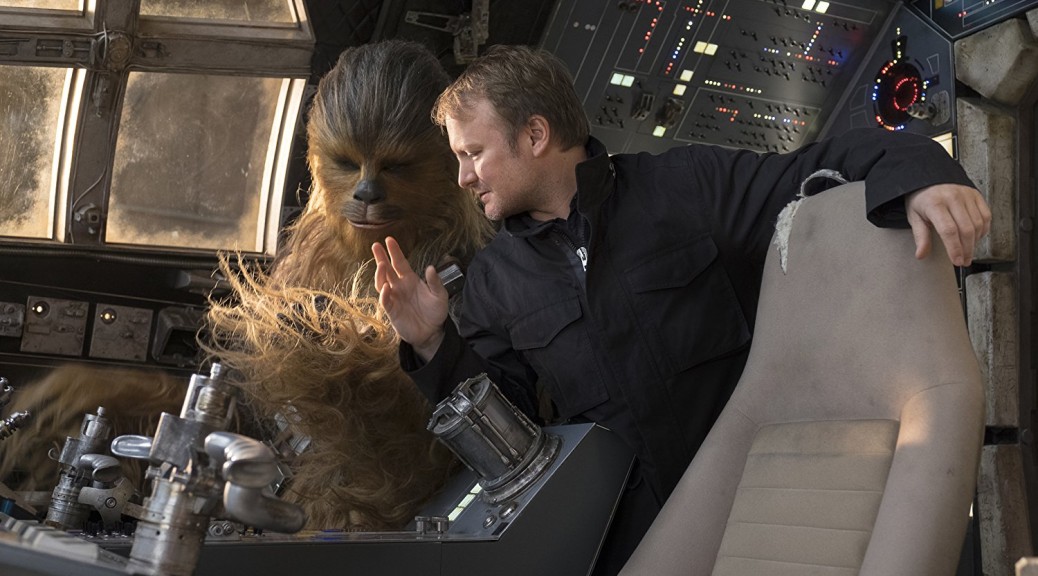
“To be fair, nobody ever bosses Mark Hamill around. Good luck with that,” Johnson said, laughing. “But I formed a great working relationship with Mark and collaborated with him on this part. But yes, on any single day of the past four years of my life, I can stick my finger down on the calendar and say, ‘On this day was a surreal experience.’ For someone who grew up as a kid on ‘Star Wars’ and it being their world, everything from getting to work with Mark and Carrie Fisher to getting to film on the Millennium Falcon set … You name it, there were just so many instances that it was hard not to have flashes of, ‘Oh, my God, this is really happening.’

“But then those flashes happen, and you get to work, and you get to start to tell a living, breathing story, which is ultimately the goal,” Johnson added. “The purpose of the film is not to showcase all this stuff from your youth, but to tell a story that’s alive right now with these characters and take each one of them seriously as characters.”

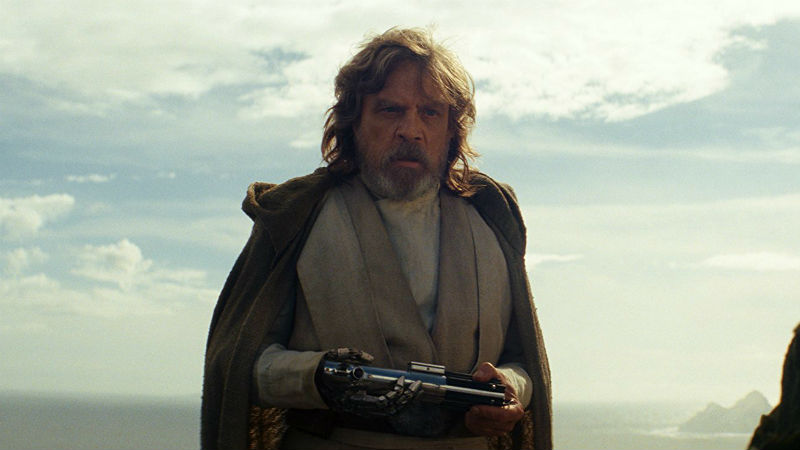
In the first film in the new “Star Wars” trilogy, director J.J. Abrams’ “The Force Awakens” dealt with the introduction of new characters and caught up with legacy characters like General Leia (Fisher) and Han Solo (Harrison Ford). The telling of Luke’s story, for the most part, rested on Johnson’s shoulders. Fans only briefly saw Luke in the last minute of “The Force Awakens.” Rey (Daisy Ridley) finally locates the legendary Jedi master on an island on the remote planet of Ahch-To, where she presents to him his old lightsaber.

But in a genius spin to show just how Luke’s story evolved in “The Last Jedi,” the grizzled Luke flips the hilt over his shoulder in a move that no one could have possibly seen coming. It was the first of many unexpected moments in the film, even though Johnson says his flip move, so to speak, makes complete sense in the context of the character’s overall storyline.

Mark Hamill in 'Star Wars The Last Jedi' (photo - Disney Lucasfilm)

“For me, it doesn’t start with wanting to do something unexpected or surprising. It’s always a nice thing when you can get that, but for me, that moment with Luke was inevitable,” Johnson said. “It’s wonderful that it plays like a surprise, but given where he’s at in ‘The Force Awakens,’ even though he’s exiled on this island, even though he’s taken himself out of the fight, you realize there must be a reason he’s doing this. I started out by figuring out where the character had to be at in this movie, and it all added up to him being in a place where it would have made no sense at all if we had gotten exactly what we all wanted — which was him firing up the lightsaber and saying, ‘Let’s go kill the bad guys.’ So, the surprise for me is always best when it’s a bi-product of really trying to honestly find he most interesting place to take these characters.”

To date, “The Last Jedi” has made more than $1.2 billion in theaters worldwide and is quickly honing on a place in the top 10 highest-grossing films, globally, of all time. And while “The Last Jedi” is extremely popular, it hasn’t stopped some fans from being vocal with their criticism of the film, including how Johnson dealt with Luke’s fate.

Since Johnson is such a huge fan of “Star Wars,” it does cause him moments of introspection, but ultimately, he said, the best course to take as a filmmaker is to stay true to his vision to see the story evolve — especially since he’ll be involved in the “Star Wars” universe again as the writer and director of the first film in a brand-new trilogy.

“Having been on the internet, I can say the vast majority of feedback I’ve gotten from fans has been ecstatic and on the same level of the critics,” Johnson said. “There are fans who don’t like it and there are fans who absolutely love it. That’s because it’s a ‘Star Wars’ movie. Having been a ‘Star Wars’ fan myself for the past 40 years, (the discussion about the film) is something I’m acutely aware of. If you make a ‘Star Wars’ movie and put some soul into it and give it some life, that means you’re going to have to make choices that inevitably are going to please some fans and not please others.”

Darth Vader - Lord of the Sith Star Wars Premium Format(TM) Figure

Having grown up in the fan base, Johnson said, he knows that not being able to please everybody is always going to be the case.

“What you need to do as a filmmaker, and this is what Lucas did and all the filmmaker approaching these new movies need to do, is to tell a personal story,” Johnson said. “You have to tell it the way it feels right to you (within the ‘Star Wars’ universe). You have to tap into what that is and you have to trust that. The moment you start second-guessing that, you’re dead in the water, and you’re going to make something that is guarded, dishonest and manipulative, and all the wrong things.

“So, I love hearing the discussion among the fans. I love hearing how the movie connected with people and it’s interesting to hear people’s complaints about it,” Johnson added. “It all adds into the big soup that is the reaction fans have to any new piece of anything that is ‘Star Wars.'”

Tim Lammers reviews movies weekly for The KQ92 Morning Show,” “KARE 11 News at 11” (NBC), “The Tom Barnard Podcast” and “The BS Show” with Bob Sansevere.

Copyright 2017 DirectConversations.com

Tim Burton Book 2
Click book cover for info on how to buy!

Interview: Kenneth Branagh’s ‘Orient Express’ song is one you’ll never forget

There’s no question that acclaimed actor-director Kenneth Branagh’s latest cinematic opus — the big-screen adaptation of famed author Agatha Christie’s classic novel “Murder on the Orient Express” — is rolling strong in theaters domestically and overseas, having already amassed an impressive global tally of $275 million with no signs of slowing down.

As movie fans have found out, Branagh becomes Christies’ time-honored Belgian detective Hercule Poirot, who boards the Orient Express simply as a mode of transport to get back home to London but finds himself investigating a mysterious murder where everyone on the train is suspect.

With a huge presence in front of and behind the camera, Branagh’s fingerprints are all over “Murder on the Orient Express,” including the area of songwriting, a place he’s only ventured to once before.

The first time around, Branagh and his collaborator of nearly 30 years, film composer Patrick Doyle, (along with music producer Tommy Danvers) wrote “Strong,” the end-title song for the 2015 blockbuster “Cinderella.” Now, with “Murder on the Orient Express,” Branagh has put his pen to paper once again for the lyrics to “Never Forget,” the haunting end credits song for which Doyle wrote the music.

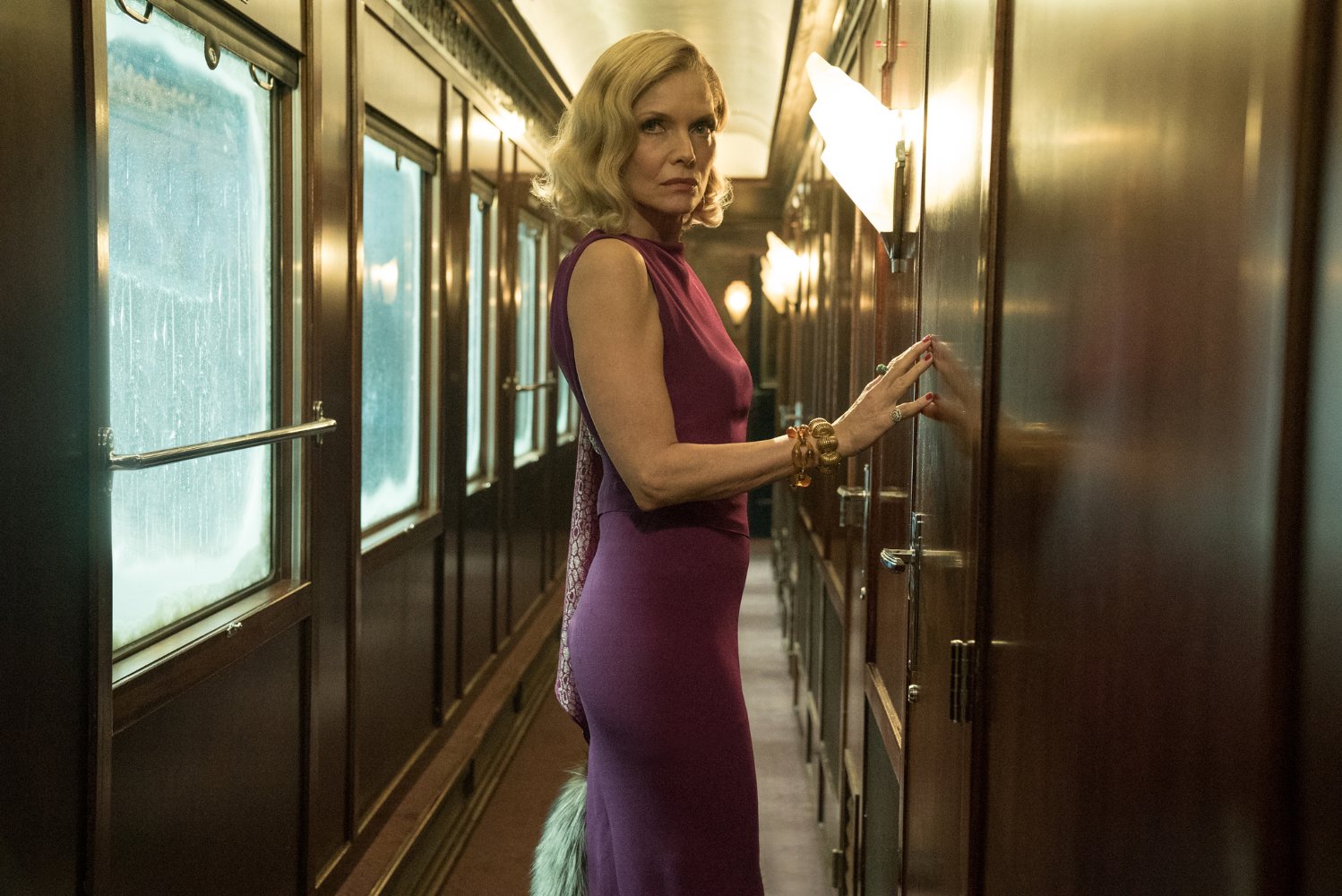
In a phone conversation with the actor-filmmaker this week, Branagh discussed “Never Forget,” an ethereal ballad sung by his co-star Michelle Pfeiffer. The song serves as an elegy for the tragic loss of a character at the heart of the film’s narrative.

Michelle Pfeiffer in 'Murder on the Orient Express

“They say, ‘Music is a vehicle for transcendence so that one can commune with God.’ That saying relates to music and lyrics (like ours), which talk about this incredible loss at the center of the film. To console is part of what people do to ease that suffering,” Branagh said. “And if the characters in this story are going to leave that train and have some future journey in their lives, some of the healing that Poirot talks about in the film is going to have to start happening.”

Branagh said “Never Forget” in a way grew from personal experiences growing up in Ireland — feelings that were awakened by a theme Doyle incorporated into the film’s score.

“It reminded me of moments in my youth when I used to hear my granny get upset,” Branagh recalled. “She would sing the Irish ayre ‘Danny Boy’ — she had a brother, Danny, who she had lost — and it would make her cry every time she sang it. But it was so necessary for her to sing it because it was a way of easing that pain. It was cathartic and very therapeutic. ”

Ultimately, to capture those feelings for “Never Forget,” Branagh knew Pfeiffer — who previously demonstrated her singing talent in “The Fabulous Baker Boys” and “Hairspray” — could bring to the song a haunting air of heartbreak and hope rooted in the experiences of her character, Caroline Hubbard.

“We wanted some emotional closure and we knew that Michelle Pfeiffer’s beautiful performance in the film could translate into music — but not with the idea of trying to produce some dazzling vocal gymnastics — but to experience this basic tension and beauty and melancholy in the song between the love for the innocent that is lost, and the desire to let them know that they will never be forgotten,” Branagh said. “It’s very simple, but it can be very profound. … It provides an emotional character closure that goes to the place we haven’t been in this movie. … It’s a direct appeal to and from the human heart.”

While “Never Forget” certainly merits consideration this awards season for Best Original Song, “Murder on the Orient Express” easily warrants attention in several other categories — from the picture as a whole to Branagh’s expert direction and portrayal of Poirot, to Doyle’s captivating score, the film’s stunning cinematography and its meticulous production and costume design.

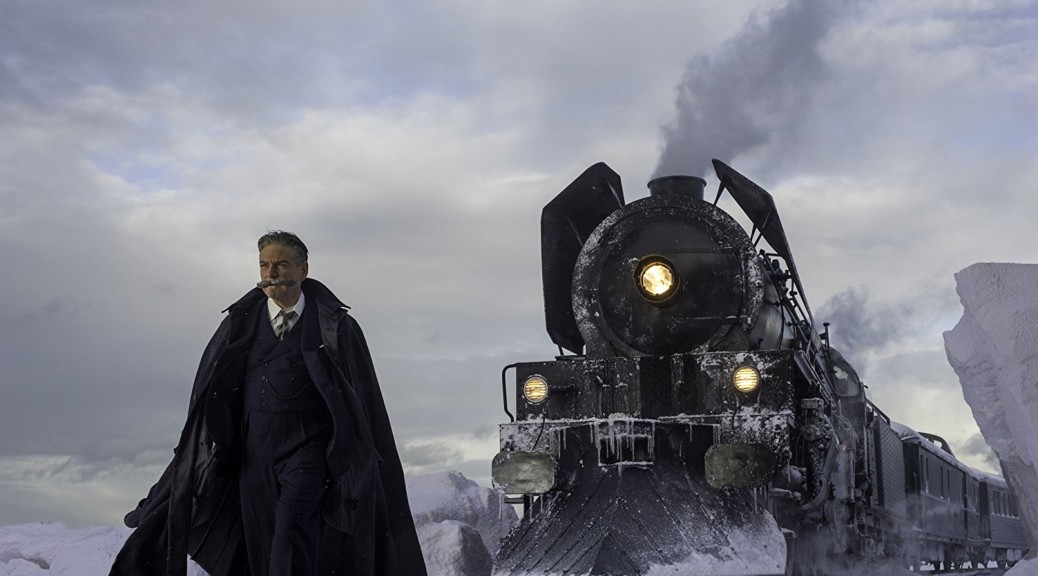
In the case of costume design, one item of note is a mustache guard for Poirot, which we see him wearing as he awakens in the morning after his first night aboard the Orient Express. An apparatus designed to keep Poirot’s perfectly coiffed handlebar mustache in place, the quick shot of the mustache guard is not only good for a laugh, in a subtle way it further defines the character as a detective who strives for perfection.

“It’s one of those moments where you understood the details of a lot of people’s work, particularly that of Alexandra Byrne, our costume designer, who was responsible for that mustache guard, but who had also worked so closely with Carol Hemming, our makeup and hair designer — who worked for so long and so hard for such detail on the mustache itself,” Branagh enthused. “It boldly goes where few mustaches have gone before to fulfill Agatha Christie’s requirement that it be one of the most ‘immense’ and ‘magnificent’ mustaches in England.”

Copyright 2017 DirectConversations.com
Tim Burton Book 2
Click book cover for info on how to buy!