Category Archives: Interviews

Interview: Gary Oldman talks transformation into Winston Churchill for ‘Darkest Hour’

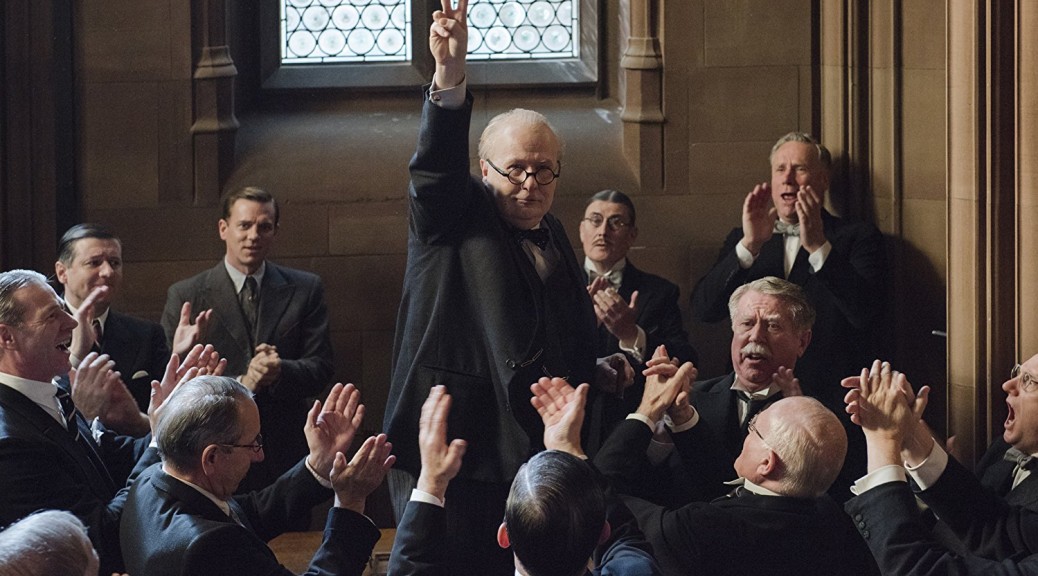
When you see a performance as stunning as Gary Oldman’s in the new biographical World War II drama “Darkest Hour,” it begs the natural question of where Oldman the actor ended and his channeling of legendary British Prime Minister Winston Churchill began. On the face of things, it’s easy to presume that Oldman’s transformation took place somewhere in the daily three and a half-hour makeup process and extra half-hour to assemble the costume; but for the master thespian, becoming Churchill to face the darkest hour in the history of Great Britain took a lot longer than people would imagine.

“It takes the better part of a year to work on the role, and that includes all of the things that you would imagine. You read the material and then go to the books and the news footage and speeches, and all of that stuff,” Oldman told me in a recent phone conversation from New York City. “What it becomes is a year of one’s life in surrendering to all things Winston. But there is only so much of the work that you can do in isolation. So, I decided that once the script was finalized and there were various changes made to the script as it evolved, that I learned it like a play. I knew it long before I got to the set so I’d just have the material inside me and wouldn’t have to think about it. It’s like the old saying, ‘It’s not how well you’ve known something, but how long you’ve known it,’ so the role was in my DNA.”

Now playing in limited release and expanding to more locations throughout the country on Friday, “Darkest Hour” chronicles a short yet remarkable time in the life of Churchill in 1940, when the legislator was suddenly escalated to the post of prime minister because of the resignation of his predecessor Prime Minister Neville Chamberlain (Ronald Pickup), who lost the confidence of Parliament. With little support from either side of the political aisle and perhaps most importantly, King George VI (Ben Mendelsohn), Churchill was faced with either negotiating for what it sure to become a doomed peace treaty with Nazi leader Adolf Hitler, or take a stand to fight for the ideals, liberty and ultimately, the freedom of Great Britain.

Intensifying the situation, however, is that whatever tact Churchill takes, it must be accomplished in a matter or mere weeks. Nazi forces are moving across Western Europe and have 300,000 British troops surrounded with seemingly nowhere to go on the beaches of Dunkirk in France.

Written by Anthony McCarten and directed by Joe Wright, “Darkest Hour” comes at an interesting time in the state of politics in both the U.S., where the divide between liberals and conservatives is as deep as perhaps it has ever been. But there shouldn’t be a quandary for audiences rooting for Churchill — who early in his career moved from the conservatives to the liberals, only to switch back to the conservative party 26 years prior to the dire circumstances Great Britain faced in “Darkest Hour” — simply because partisanship has no place when it comes to fighting evil.

“There’s nothing either partisan or bi-partisan about going after Hitler,” Oldman said. “It’s an interesting question, though, because Churchill made himself at times unpopular, because this was a man who made mistakes in his career as we all have. He certainly made some blunders. But as far as Hitler was concerned, Churchill was almost clairvoyant.

“He caught on to Hitler very, very quickly — way back in the early ’30s,” Oldman added. “Once he got a taste of it, he came back to the UK as a backbencher. He stood up in Parliament and said, ‘We should rearm — this guy is coming after us,’ but no one would believe him, because it was unthinkable, especially after the first World War that there would be another war. Pacifism was very universal, and they wanted to repair relationships with the Germans, so what Churchill was doing was considered a little politically incorrect and scaremongering. But he stuck to it. He never wavered from it — and he was right.”

In some ways, Oldman believes Churchill was destined to be at the right place at the right time in history; all of which stemming from a singular incident in World War I that’s recounted in “Darkest Hour.”

“If one of those bullets that he talks about in the first World War, when he is quoted, ‘There is nothing more thrilling than being shot at without result,’ if one of those stray bullets would have hit him and removed him from the scenario, or if he had worn out in Parliament and capitulated, then the landscape would have looked very different,” Oldman said. “All of Western Europe would have been fascist … and while people say it, and they say it in jest, ‘If it wasn’t for Winston Churchill we’d all be speaking German,’ there’s some truth in that.”

Gary Oldman Darkest Hour

Not surprisingly, Oldman is already a favorite for a Best Actor Oscar nomination for his performance as Churchill, as are Wright and the film for Best Picture and Best Director, respectively. But in coincidental bit of timing, another film about the pivotal events depicted in “Darkest Hour,” “Dunkirk — director Christopher Nolan’s spectacle about the soldiers trapped on Dunkirk Beach — is also considered an odds-on favorite for Oscar nominations.

No matter how the Oscar race shakes out, Oldman agreed with my observation that the true victor is not either “Darkest Hour” or “Dunkirk,” but history itself, as the acclaim both films are receiving essentially ensures that these life-changing historical events will never be forgotten.

“It’s interesting when we screen this film. I can forgive the Americans for not knowing the real details of what happened, but you’d be surprised to the number of people that we screened it to in Britain who don’t know this story outside of scholars and historians, and people that really follow it and look at history,” Oldman said. “It’s amazing the number of people who said, ‘Oh my God, I had no idea.’ So, both films present a story very much worth telling and I couldn’t have put it better: History wins on this one.”

Copyright 2017 DirectConversations.com
Tim Burton Book 2
Click book cover for info on how to buy!

Interview: Miles Teller, Adam Schumann Talk ‘Thank You for Your Service’

It’s not often where you can see a film that changes your perspective on a single but often-used phrase, and there’s no question that “Thank You for Your Service” is one of them. It’s a phrase that people often say to veterans of any war when you meet them, yet, after seeing a true-life film based on the experiences of an Iraq War veteran — Army Staff Sgt. Adam Schumann — they take on a different sort of meaning.

It’s a film that, given the hardships veterans endure when they return home, makes the phrase “thank you for your service” almost feel like an empty gesture. At least in the context of this film, it feels like ill-equipped system that greets them when they return home is in some ways thankless for their service, and ultimately, thankless for the sacrifices they made while carrying out the duties for their country.

So, what should we be saying to soldiers or veterans when we great them? In a recent phone conversation from Chicago with Schumann and Miles Teller, who plays the soldier in the film, the answer is simple.

“I think, ‘Welcome home’ is the best thing you can say to anybody,” Schumann said.

Teller added that there are other ways to respond to veterans, too; something that he gained insight by working on the film.

“If you want to just say one thing, say ‘Welcome home’ as Adam said, but people can also be asking, ‘What branch are you in?’ ‘Where did you deploy?’ or ‘Where did you serve?'” Teller said.

Teller realizes that sometimes asking about military service is a difficult subject to broach with veterans, particularly for those who served in wars prior to Iraq and Afghanistan.

However, having friends that have served in the military and by forging a friendship with Schumann, Teller is glad to see that films like “American Sniper” and “Thank You for Your Service” are finally addressing the devastating effects of posttraumatic stress disorder (PTSD) and a traumatic brain injury (TBI), because it effectively opens the conversation about how to get soldiers the help they need as they integrate back into civilian life after serving in a war.

“The older generation of veterans wanted to deal with things in a masculine way; to be tough and to be thick-skinned and not talk about it,” Teller said. “Now, we’re just learning as these studies are going out and putting terms on it — posttraumatic stress and TBI — and with the amount of suicides (we’re finding out that not talking about it) doesn’t work. These guys have a lot of open wounds and I think as a nation, yes, we haven’t done enough in terms of welcoming soldiers back. So yes, a conversation is better than an empty sentence.”

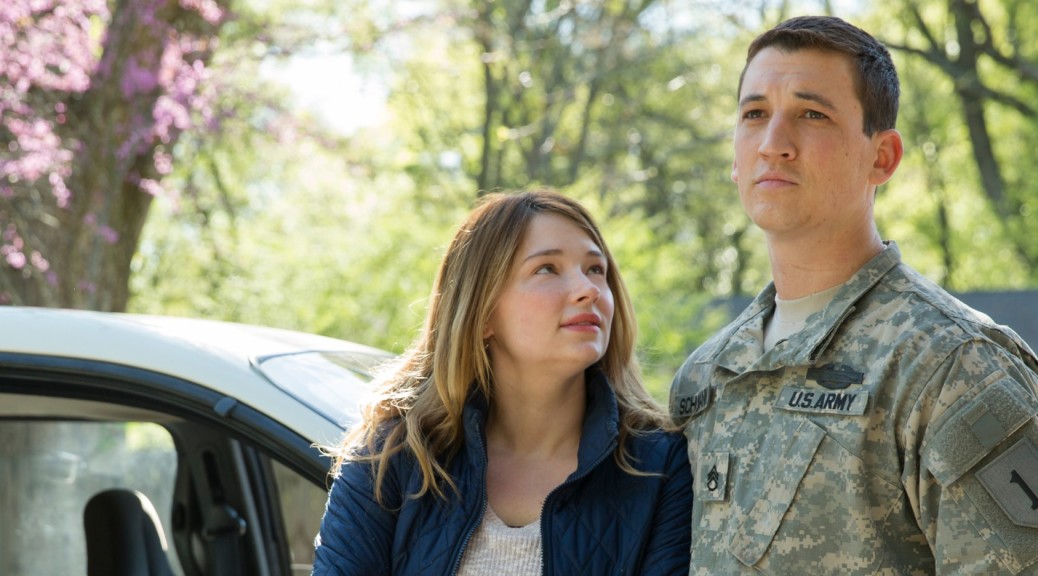
Opening in theaters nationwide on Friday, “Thank You for Your Service,” chronicles Schumann’s return home from the Iraq War and his inability to reacclimate to civilian life, which has a particularly tough effect on his wife, Saskia (Haley Bennett), and ultimately, their young family. Sadly, Schumann isn’t alone in his troubles — two of his friends and fellow service members (played by Beulah Koale) have also returned and are facing difficult circumstances — and much of it is rooted in a specific tragic event that occurred when the three were serving in the war. Compounding the problem is a Veterans Affairs system back home that is under-equipped to meet their mental health needs.

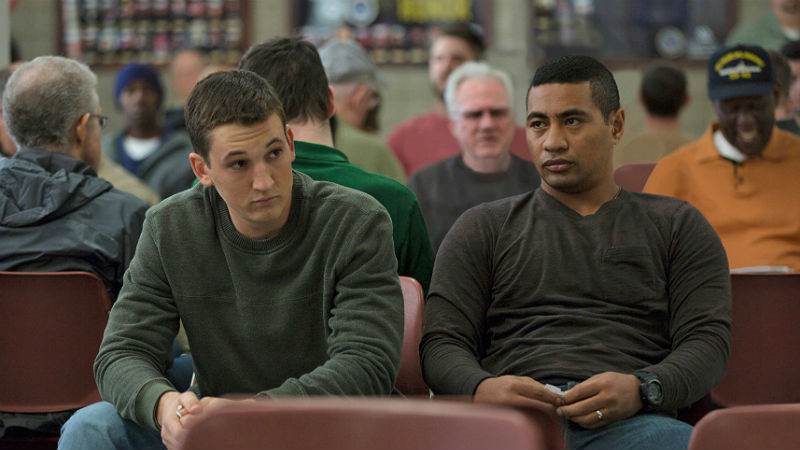
Miles Teller and Beulah Koale in Thank You for Your Service (photo - Universal Pictures)
Miles Teller and Beulah Koale in ‘Thank You for Your Service’

Even though Schumann first confronted his story in the film’s source material, the David Finkel book “Thank You for Your Service,” the veteran admits that it is still extremely difficult to watch the film. Schumann not only commends Teller’s work in the film to bring his harrowing tale to life, but also writer-director Jason Hall. Hall, who also tapped into the nerve of the subject matter with his Oscar-nominated screenplay for “American Sniper,” very much did the same with “Thank You for Your Service,” Schumann said.

“The movie was extremely gut-wrenching to watch,” Schumann said. “I think my mom said it best, which was, ‘I feel like I just went through two hours of surgery without anesthesia.’ And that’s what it felt like. I was crying and laughing, and I think that’s a testament to how well Miles acted, and how well Jason relayed what was in the book into the script and direct it in such a way that grabbed our very core. … It’s therapeutic to see the movie, and the more I see it the more I talk about it, the better I get. It’s been a positive experience all around.”

Teller, who has given his all both physically and mentally in many of his films, said “Thank You for Your Service” required the same sort of commitment; but one that was particularly resonant because he was playing a real-life person he had access to.

“If I’m challenged with something, that mean’s the character I’m playing went through a lot of stuff and has taken an emotional toll on them,” Teller said. “Playing Adam required all of it, the physical, emotional and the mental aspects.”

Ultimately, having starred in such films as the Best Picture Oscar-nominated “Whiplash,” the true-life boxing drama “Bleed for This” and most recently, the true-life firefighter drama “Only the Brave,” said it’s a privilege to act in any film, particularly those that address real-life issues.

“There’s a lot of film and TV out there where a lot of situations the characters are in aren’t too far removed from your own life. I’ve been fortunate enough to get to work on some projects that have absolutely incredible stories of characters being put under extraordinary circumstances,” Teller said. “I got to put through a boot camp, I got to talk with vets and was welcomed into their homes. I got this incredible experience of what it would be like to do this. For me, to get the kind of training that I’ve had and to get to try on all these different hats, as it were, for these characters has really been a blessing.”

Note: “Thank You for Your Service” studios Universal Pictures and DreamWorks Pictures are offering free tickets to a special screening of the film Thursday night for up to 10,000 active military servicemembers and veterans. Find out more at https://www.thankyouforyourservicemovie.com.

Copyright 2017 DirectConversations.com
 

Interview: Filmmaker Jason Hall talks ‘Thank You for Your Service’

As Veterans Day fast approaches, a new film that examines the true-life plight of soldiers returning home from the Iraq War is about to open in theaters — and thankfully for moviegoers and most importantly, veteran viewers, “Thank You for Your Service” was completed under the watchful eye of filmmaker Jason Hall.

Hall, who was nominated for a Best Adapted Screenplay Oscar for adapting late Navy SEAL Chris Kyle’s novel “American Sniper” for the big screen in 2014, adapted the screenplay of David Finkel’s book “Thank You for Your Service,” and was also handed the director’s reigns for the project by Steven Spielberg. Considering that Spielberg first intended to direct the film himself, installing Hall at the helm of the gut-wrenching drama says a lot about the legendary filmmaker’s confidence in the first-time director.

Clearly Spielberg knew through his development of the screenplays of both “American Sniper” (which Clint Eastwood directed) and “Thank You for Your Service” that Hall had keen insight into the struggles of veterans trying to re-adjust to civilian life back home after the service,  and specifically relating to the latter, how under-equipped the U.S. government is to meet the mental health needs of its solders.

“The thing I learned with Chris Kyle was that even the heroes are carrying this home. And while it’s one in five or one in four that come home with some version of trauma, the services we provide just aren’t enough,” Hall said in a recent phone conversation from Los Angeles. “As for ‘Thank You for Your Service,’ the depiction of what David Finkel did in the book was so frustratingly harrowing to me. I just couldn’t believe it, so I started looking into it.”

Opening in theaters nationwide on Friday, “Thank You for Your Service” tells the compelling true-life story of Army Staff Sgt. Adam Schumann (Miles Teller), who returns home along with two fellow solider friends from the Iraq War, only to soon discover that none of them can handle the prolonged effects of war and a specific combat tragedy that changed all of their lives.

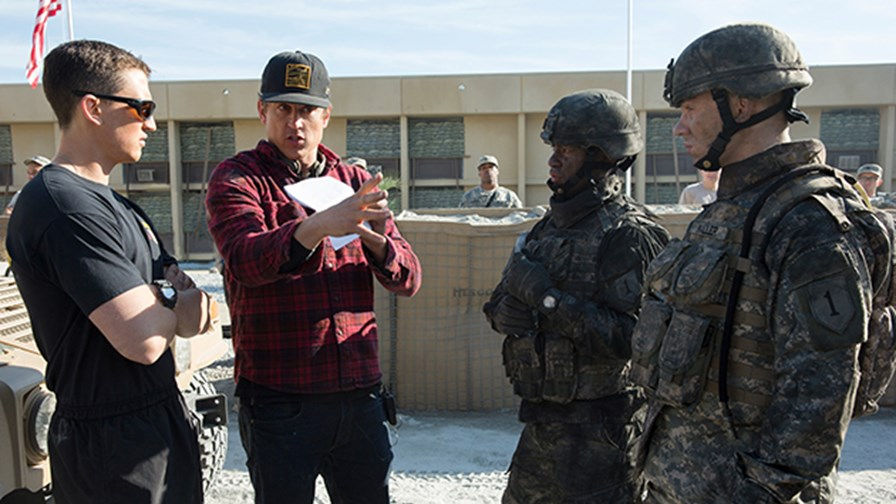
Photo: Universal Pictures
Writer-director Jason Hall on the set of ‘Thank You for Your Service’

Hall said Finkel’s book came to him while he was adapting the screenplay for “American Sniper” for director Spielberg, who eventually handed the project over to his fellow filmmaker Clint Eastwood. So, by the time “American Sniper” hit theaters, Hall said he started talking with VA psychologists and started visiting VA hospitals around LA, while consulting former Secretary of Veterans Affairs Bob McDonald as well.

While some may want to classify “Thank You for Your Service” as a war film, Hall — whose grandfather, uncle and half-brother all served in the military — said it’s not so much a war film as it is a film about how soldiers deal with the effects of war.

“I think the effects of war are a battle of their own, in as much as the war continues to echo in, around and in front of these veterans,” Hall said. “It wounded them, and it continues to inflict them. So, for me, it was about finding a way to bring the immediacy of those moments to the film and examine what happens in the ‘after war.’ That’s what David Finkel calls it in his book — the ‘after war.’ There are depictions in this movie of life or death right here in America, on the home front, that we wouldn’t normally consider to be the battlefield.”

While we discover how stressed Veterans Affairs is in trying to handle the influx of thousands of soldiers returning home with posttraumatic stress disorder (PTSD) in “Thank You for Your Service,” Hall said the point of the movie isn’t to pin blame on one entity.

“While the services are faulty, the reality is, the VA is still the best place for soldiers to go for trauma and for help,” Hall said. “You can’t do ChoiceCare and go to your doctor in Beverly Hills and tell him you saw some things in the war that are really troubling you. He’s not going to know what to do with that. So, as bad as it is, it’s what we got to work with and we have to find a way to make it work.”

So, while the government may be an easy scapegoat when it comes to meeting soldiers’ mental health needs — yet there’s no denying they are woefully understaffed to handle the immense caseload — Hall said the solution is up to us to rally for change to the flawed system and culture for a one that the soldiers deserve , especially given the amount of sacrifice they’ve made for our country.

“At a certain point it’s up to us. At a certain point it’s up to society to find a welcome these guys back in, because it’s not just the VA,” Hall said. “Some of what we see is dictated by the way they are welcomed back into society and the way that we perceive them — not only as heroes, but as wounded.”

Sometimes, Hall said, soldiers have been affected by war in ways most people wouldn’t expect.

“Some of these guys don’t even get out of the armory and they’re messed up by the institutionalization by the enterprise of war, or the repetitive nature of firing all these rounds, with something thrust against your cheekbone in a way that it disturbs your brain” Hall said.  “There’s a lot that goes into this that we don’t fully comprehend, and certainly the VA and military didn’t comprehend going into the war or what they were going to have to deal with when these guys came home.”

Naturally, Hall depended on Schumann as much as he could to get the details of his story right, and is thankful that the veteran was willing to open himself up to reveal some very painful chapters in his life.

“To have Adam around, to have someone around as your source of all of this, to be so emotionally accessible and so emotionally articulate was so helpful,” Hall said. “Adam was there at the starting line. This guy was heroic in battle, but then he came home and did something equally or more heroic in revealing himself — not only with what he experienced in the war, but what he continued to experience because of what he had seen, done, gone through and lost over there.

“To me that was the most heroic thing that anyone could have done in that entire war — to come home and reveal themselves, which is not something you’re trained to do,” Hall added. “Adam took it upon himself to do that because he knew it was going to help somebody else.”

Copyright 2017 DirectConversations.com
Interview: Dylan O’Brien talks making of Vince Flynn’s ‘American Assassin’

It’s a Friday afternoon — exactly one week before his new film “American Assassin” is slated to open in theaters nationwide — and actor Dylan O’Brien is waiting patiently to attend the premiere of the film in St. Paul, Minnesota.

Normally, it’s not the sort of place big premieres outside of Hollywood take place, but this time it’s warranted because St. Paul is the hometown of the Vince Flynn, the late author who created the New York Times best-selling Mitch Rapp novels, including “American Assassin.”

In a phone conversation before the premiere, O’Brien said he expected the premiere — which was attended by Flynn’s widow, Lysa, and their children; producer Lorenzo di Bonaventura; and many of Flynn’s family and friends — to be one of the most emotional events he’s experienced to date. In short, O’Brien was honored to be there to represent the film and commemorate the life and accomplishments of Flynn, who died of cancer in 2013 at age 47.

“Honored is the perfect word for how I feel. It’s going to be really nerve-wracking,” O’Brien said. “It’s really going to be an emotionally-charged night in a way and I’m just really happy to be here, honored to play the character and honored to bring it to his hometown and celebrate.”

Originally released in 2010, “American Assassin” is actually the 11th Mitch Rapp novel, which serves as a prequel story of Rapp before he becomes the expert CIA agent that readers came to know in the books preceding it.

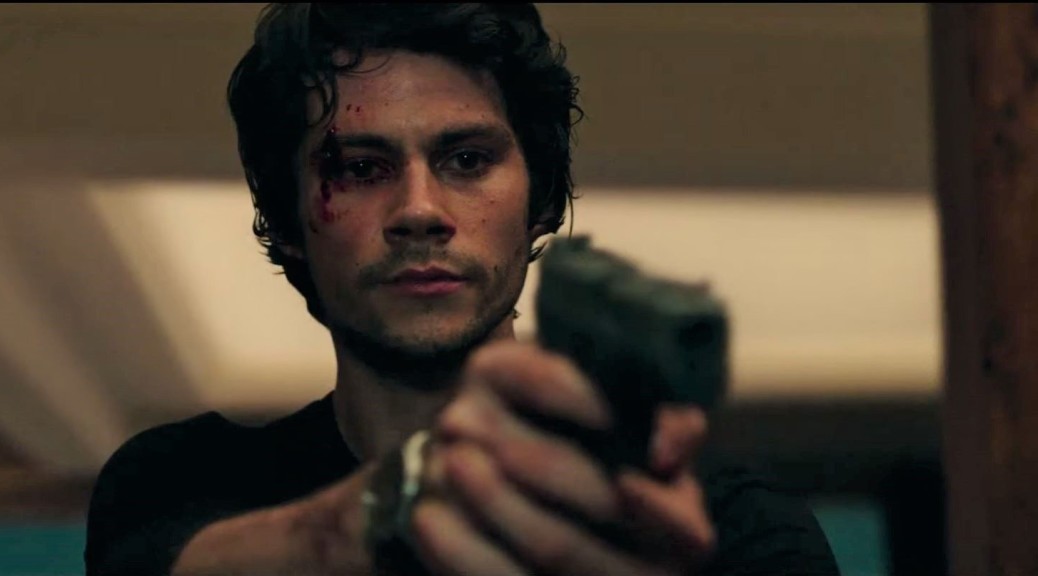
The film version of “American Assassin” chronicles how a 23-year-old Rapp — who lost his parents in a car accident at age 14 — is recruited to become a counterterrorism agent after he suffers another deep personal tragedy at the hands of Islamic terrorists. Michael Keaton also stars as Stan Hurley, a grizzled black ops veteran who trains Rapp; as well as Sanaa Lathan as CIA Deputy Director Irene Kennedy; and Taylor Kitsch as Ghost — a mysterious figure on the verge of starting a deadly nuclear conflict in the Middle East.

O’Brien has been down the road of adapting well-known books into films before, having starred in the big screen adaptations of “The Maze Runner” novels. For “American Assassin,” the actor said he informed himself of who Mitch Rapp was in reverse, essentially, since he didn’t read any of Flynn’s work before he got the role.

“The script was my first introduction to the role, then obviously I did my research and read about all of the books and the character,” recalled O’Brien, who filmed “American Assassin” after recovering from traumatic injures he suffered during the making  of “Maze Runner: The Death Cure.” “I even went to fan pages to read comments on the character just to get an idea of who the guy was outside of the script. Once we got doing it, I really wanted to build him from the ground up and come from me with the thought that I understood this guy.”

O’Brien said her felt his approach to came from a “really original direction.”

“My goal first and foremost was about really humanizing the kind of cold-hearted Mitch we see in the books. Everyone who knows the books describes him as this cold, ruthless and brutal killer, and I can see why,” O’Brien explained. “But I also saw so much more underneath. I was really excited to bring all these layers underneath to life.”

O’Brien, 26, said that readers of the “American Assassin” novel will notice changes from the page to the screen adaptation, mostly because of the shift in time periods. The actor said the move was made largely to give the story more of a contemporary feel, especially in the age where terrorism is at the forefront of people’s minds.

Producer Lorenzo di Bonaventura, Lysa Flynn and Dylan O'Brien at the St. Paul premiere of "American Assassin." (Photo by Adam Bettcher/Getty Images for CBS Films)
Producer Lorenzo di Bonaventura, Lysa Flynn and Dylan O’Brien at the St. Paul premiere of “American Assassin.” (Photo by Adam Bettcher/Getty Images for CBS Films)

“You get changes with all adaptations, obviously, and this one’s no different, especially considering how the times have changed with what the book deals with and what we deal with in the movie, “O’Brien noted. “We’re updating and modernizing those situations and events, and done some other major things, too, by adding a major character to the film version. You want book fans all over to approve and hope that what you’ve done still captures that spirit, and hopefully they’ll sign off on those changes, especially in Vince’s hometown, and especially from his family and friends.”

Luckily, O’Brien said, Lysa Flynn was a part of making the film happen, and having her seal of approval meant everything to everybody on the production.

“It really started with Lysa. It’s been the biggest blessing to have her so on-board the entire time with her endless support,” O’Brien said. “She just brings such a warmth to the entire process. She was so happy and so grateful just to come to the set to see the story brought to life. That’s made the process so much easier for us, too.”